Henry Billings Brown Quotes
Legislation is powerless to eradicate racial instincts or to abolish distinctions based upon physical differences.
Henry Billings Brown, 1836-1913, U. S. Supreme Court Justice, Plesy v. Ferguson, 1896
Sourced by: Eigen's Political and Historical Quotations


This quotation shows two important historical facts about Southern Racism. The first is now great the social pressures were against any white who would try and alter the status quo. The second was that none the less there have always been whites in the South who, despite the great social penalties, did the right thing and not only improved the situation, but more important, made most Americans realize that Southerners were not all racists any more than all of any group had any negative behavior.


Reconstruction was the period in the South after the Civil War. The change that emancipation brought to the white South was traumatic, and there was a constant struggle between those who wanted the Blacks to be integrated into Southern Society—and those Southerners who wanted to create a society that would be as close to slavery as possible, So the Klu Klux Klan and other terrorist organizations formed and with lynching and other intimidation, much of the initial progress of Reconstruction was rolled back and did not get reinstated until the Civil Rights and Voting Rights Acts were passed in 1964.


This quotation has been one that has been used to argue against Black and other minority racism as well as white racism.


The President had frequent stag (men only) dinners of national notables. At this dinner, the Chief Justice was seated close to the attorney who was representing the Southern segregationists in the Brown v Board of Education case that was before the court. Warren had objected to being in such close proximity to one party to a case before the court. Eisenhower, had taken Warren aside to smooth any bad feelings and thinking Warren might be distressed by the attorney’s racist and segregationist views tried to explain the Southern point of view. Although Eisenhower was not a racist or segregationist himself, he had worked closely with Southerners his whole career, and thought he understood them. Warren was so surprised by the President’s insensitive remark, that he noted it and revealed it in his memoirs.


Moynihan was an Assistant Secretary of Labor at the time. At the time politicians did not overtly discuss the racism that had, did then, and still does permeate the American culture. Segregation had just been made illegal but was still rampant. Many whites were highly insulted by this paper. Most Blacks were outraged at Moynihan's general thesis. So the report offended many.


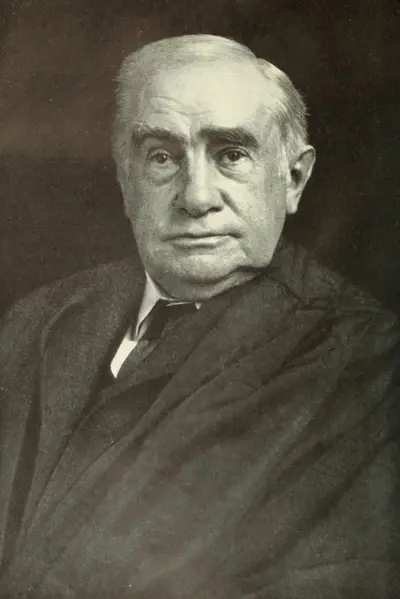
Henry Billings Brown was an associate justice of the Supreme Court of the United States from 29 December 1890 to 28 May 1906. A respected lawyer and U.S. District Judge in Detroit, Michigan, before ascending to the high court, Brown authored hundreds of opinions in his 31 years as a federal judge, including the majority opinion in Plessy v. Ferguson in 1896, which upheld the legality of racial segregation in public transportation and implicitly provided approval for the system of Jim Crow laws until Brown v. Board of Education in 1954.
