Kiichiro Hiranuma Quotes
Your Majesty, you also bear responsibility for this defeat. What apology are you going to make to the heroic spirits of the imperial founder of your house and your other imperial ancestors?
Kiichiro Hiranuma, 1887-1952, President of the Japanese Privy Council, Minister of Justice, Statement to Hirohito as the decision to surrender was being made, August 10, 1945
Sourced by: Eigen's Political and Historical Quotations

Other war criminals had committed suicide in conformity with the Japanese custom. But Tojo stayed alive so that he could take the responsibility from the Emperor Herohito who many Americans wanted tried for his actions and inactions during the war. But Tojo made an error. At the beginning of his trial he testified that he always obeyed the Emperor even though he was the Prime Minister and the head of government. Therefore, the Emperor was guilty of those crimes he had discussed with Tojo and the cabinet. Later, he was persuaded to change his testimony and said that he led the country to war and the Emperor wanted peace, a statement that few believed. See {587278}. While the Emperor had committed war crimes General MacArthur believed that the Emperor left in place and unpunished would make it easier to govern Japan, than if he were tried and punished. However, he and his staff fabricated a report to exonerate the Emperor rather than make his recommendation to his superiors and the President so they could either accept his view or not. He was a unilateralist in the administrative sense of the word. See {587279} for additional material on the Emperor’s guilt.

Although Emperor Hirohito had the status of a God, and his Prime Minister and Chief of the Military testified that they had never disobeyed the Emperor {587278}, there was a thorough attempt to whitewash the Emperor’s role—{587279}. Few Japanese, even years later would suggest that Hirohito might bear some personal responsibility. The Mayor was one of the few who made the statement of the obvious. He received 181 death threats and he was shot shortly thereafter by a right wing supporter of the Emperor’s.

Even some who bought the party line that the Emperor had personally not started the war or the other incursions, blamed the Emperor for his inaction.
Actually, although the Emperor wanted to surrender, there was a military coup attempted to prevent his announcement being made to the Japanese people. Fortunately, it did not succeed, but he certainly had the alternative of fighting to the death. There were Japanese hard liners who believed that they could make the invasion of mainland Japan so costly in lives to the Allies that they could negotiate terms. The Atomic Bomb however, in the mind of the Emperor and other Japanese leaders rendered that strategy moot.


It was almost unheard of for generals and retired generals to criticize the administration publicly, but the George W. Bush Administration polarized not only the country as a whole but the military as well.

Elements of the Army lied to the family of the dead soldier and the media, and then tried to cover up the lies. Abazaid is one of the few government high officials who was candid about his agency’s failure.


The Scientific Project that developed the Atomic Bomb. Hundreds of thousands of American troops were on their way to join the invasion of Japan where there were huge American casualties expected when the two atom bomb drops ended the war. At the time, surprising to most people now, the use of the atomic bomb was not an issue of controversy at all. There were no Congressman who questioned it, no newspapers which editorialized against the use of the bomb. There were not even any other counties which protested its use. The blessing of ending the war, even at the cost of less than 200,000 deaths seemed a clearly desirable tradeoff when compared with the many millions of deaths that would have occurred had the bomb not been used. As an example, the conventional bombing of Tokyo before the nuclear weapons were used killed as many Japanese as either Hiroshima or Nagasaki.


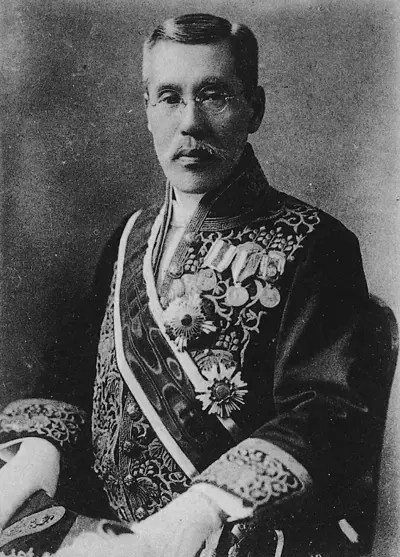
Kiichirō Hiranuma was a prominent pre–World War II right-wing Japanese politician and Prime Minister of Japan in 1939. He was convicted of war crimes and sentenced to life imprisonment.
