Bertrand Barere de Vieuzac Quotes
You are called upon to remake history.
Bertrand Barere de Vieuzac, 1755-1841, French Revolutionist & Member of the National Assembly, Member of the Committee of Public Safety, Statement to the radical Jacobins of the French Revolution
Sourced by: Eigen's Political and Historical Quotations


The terror to which he referred was to the French Revolution’s executing former aristocrats and then including anyone suspected of monarchist sympathies. This quotation shows how fanatics can rationalize evil as justice.
The terror to which he referred was to the French Revolution’s executing former aristocrats and then including anyone suspected of monarchist sympathies.

The French Revolution was out of control and terribly bloody. Most Americans and even English who supported the principles and reasons for the French revolution ceased their support because of the Reign of Terror. Jefferson, however, saw a link between France and American democracy and was reluctant to end support.

This was the group that decided who was to be executed in the Reign of Terror


The revolution turned on many of its initiators including Vergniaud. He was guillotined along with other Girondists.


Ironically, just before the bloody French Revolution, there was a substantial movement in France to abolish the death penalty. But the revolution triggered a reign of terror that was shocking to all of Europe then and in the future.

His words did indeed stimulate a reform movement which was “combative” in the sense that they contested and won the next election.
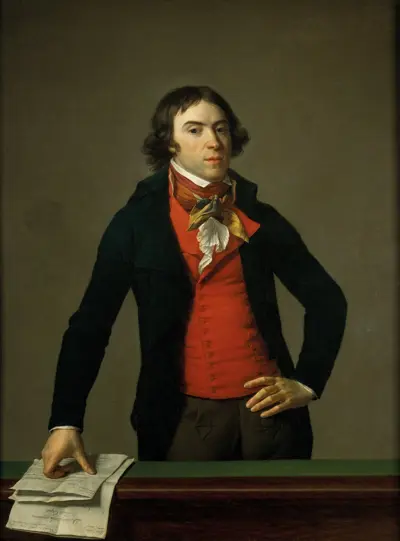
Bertrand Barère de Vieuzac was a French politician, freemason, journalist, and one of the most prominent members of the National Convention, representing the Plain (a moderate political faction) during the French Revolution. The Plain was dominated by the radical Montagnards and Barère as one of their leaders supported the foundation of the Committee of Public Safety in April and of a sans-culottes army in September 1793. According to Francois Buzot, Barère was responsible for the Reign of Terror, like Robespierre and Louis de Saint-Just. In Spring 1794 and after the Festival of the Supreme Being, he became an opponent of Maximilien Robespierre and joined the coup, leading to his downfall.
