Thomas Paine Quotes
Wrong cannot have a legal descendant.
Paine, Thomas. Dissertation on First Principles of Government. V. Pelicier, 1795.


Prosecutors, even ones who are frequent lawbreakers themselves violating defendant's rights or illegally manipulating trials, are reluctant to be officially found to have done so. Many politicians start their political careers as prosecutors and then rise to higher office. If it is officially found that they had abused a defendant and violated the law, it can be detrimental to their careers. So in many states, they have placed barriers making it much harder for an improperly convicted person to even get a court hearing. The cost to society however is that they are never accountable, and people have been wrongly imprisoned and cannot even get a hearing to prove that they were the victims of official misconduct. The rationale for these rules that prevent victims from obtaining fairness and justice is finality—the concept that there should be some end to the process of appeals so justice can be said to have been done. It prevents a kind of closure for many of the victims of crimes and their families if the guilty perpetrator is constantly appealing or can do so.


Eight of the Chicago Mayor’s cabinet had been indicted for corruption. Chicago had historically “looked the other way” when there was corruption but this time Emanuel and the Mayor Richard M. Daley have taken a more strict approach.

When asked to campaign for his arch-rival James G. Blaine for the presidency: Conkling was the most important Republican in New York State. His Presidential ambitions had been thwarted and he left government to return to his New York law practice. When Blaine became the Republican Presidential candidate, New York Republicans wanted Conkling’s OK to campaign actively for Blaine. Conkling refused. New York State went for the Democrats and Blaine lost the election by a smaller margin than New York’s electoral votes. There are some historians who question whether the quotation is an accurate one or merely apocryphal.
The ruler will be interrogated not only about his own unjust deeds but also about those of his staff
Some otherwise excellent leader, with a misplaced concept of loyalty to their staff, have been greatly harmed by not attending to this principle. Grant’s presidency and legacy was almost totally ruined by the behavior of his subordinates and appointee, with the President unwilling to fire them.


He was referring to a case where an unarmed criminal suspect was being arrested by 5 police officers who choked him to death in what the coroner ruled was a homicide. Some police union spokesmen justified the homicide on the grounds that the victim had resisted arrest (in great question from viewing the video tapes). “Had he not, he would not be dead”. The spokesman ignored the fact that the choke hold that the police used was prohibited by the Police Department Manual and Rules as well as imprudent and unnecessary in that case. Surely 5 trained policemen can physically control 1 unarmed man without choking him Sharpton observed, and with this pithy quote, put the tragedy into perspective as a violation of civil rights.

As a slave holder himself, this was a dramatic statement. Slavery was immoral, God’s justice will not be on the white slave owners side, a slave revolt or other event could occur and change things radically. One great puzzlement of American history has been why Jefferson, who wrote so eloquently against slavery and predicted the disaster that would come. would himself keep his slaves and never free them as George Washington did. Some argue that he was so broke financially, that he could not afford to free them.


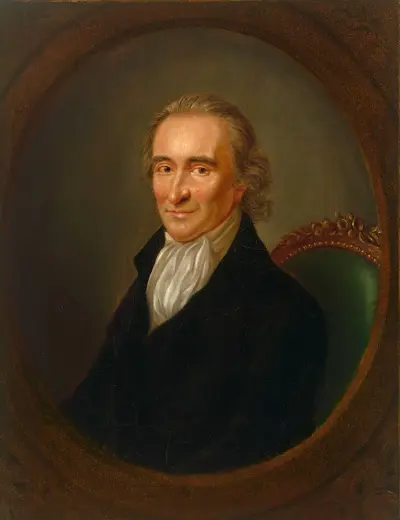
Thomas Paine was an English-born American political activist, philosopher, political theorist, and revolutionary. He authored Common Sense (1776) and The American Crisis (1776–1783), the two most influential pamphlets at the start of the American Revolution, and helped inspire the patriots in 1776 to declare independence from Great Britain. His ideas reflected Enlightenment-era ideals of transnational human rights. Historian Saul K. Padover described him as "a corsetmaker by trade, a journalist by profession, and a propagandist by inclination".
