Ambrose Bierce Quotes
WRATH, n. Anger of a superior quality and degree, appropriate to exalted characters and momentous occasions; as, "the wrath of God," "the day of wrath," etc. . . .
Bierce, Ambrose. The Devil's Dictionary. New York: Neale Publishing Company, 1911.


On May 26, 1887 President Grover Cleveland, himself a Union Army Civil War veteran, issued an Executive Order providing that the captured Confederate regimental flags held as trophies by the War Department be returned to the States of the regiments from which they were captured. Union veterans were outraged:. Within three weeks the president rescinded the order, caving in to pressure from the major veterans organization of the day, The Grand Army of the Republic. Many years later President Theodore Roosevelt ordered the flags returned to the former Confederate states.


The hatred of the English was so great in Germany during WWI that this phrase substituted for the usual “Good Morning” and “Good Bye” etc.


For many extremists Muslims, this sura calls for the torture or killing of the enemies of Islam. For the more moderate Muslims, the penalty of opposing Islam should be expulsion or banishment. The further modern complication of this sura is the definition of “making war with Allah.” To some extremists, it is writing or publishing anything contrary to their view of Islam; it is occupying any Islamic nation or warring with that nation even though the basis of the war might have nothing to do with religion; it is bringing a Bible into an Islamic nations; it is allowing alcohol to be sold and served; it is opposing their discriminatory customs and laws; it is pressuring them not to stone adulteresses.


Referring to one of his harshest critics, Rev. Jerry Falwell:


A massive earthquake struck Japan, destroying most of Tokyo and Yokohama. The deaths were so extensive that no official count was ever made. At the time, Japanese politics was polarized by two factions: One urged Japan to become democratic and modern like the West; the other, urged Japanese right wing militarism and expansionism. The shock of the Japanese population of such an enormous natural disaster, were seem by most Japanese as a punishment from God as Yasubumi and many other Japanese leaders stated. The reason for the punishment claimed by most was the recent adoption of Western ideas, lifestyles and particularly the trend away from traditional Japanese authoritarian government and toward Democracy. Japan then rejected democratic ideas and followed a militaristic, expansionistic, aggression leading directly to WWII.

During the American Revolution many patriot clerics argued against the monarchy by claiming that God has given Kings to the Ancient Jews—who had a type of Republic—as a punishment. Therefore monarchy is to be avoided.

He was reacting to the fact that the Supreme Court had ruled that a State could not criminalize adult, consensual, homosexual behavior.


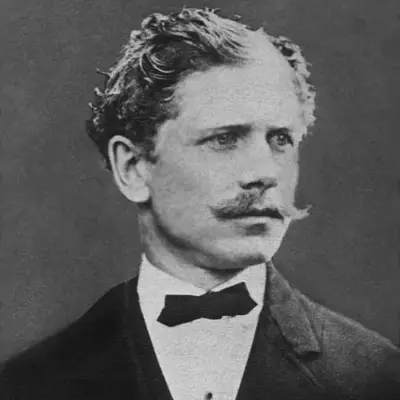
Ambrose Gwinnett Bierce was an American short story writer, journalist, poet, and Civil War veteran. His book The Devil's Dictionary was named as one of "The 100 Greatest Masterpieces of American Literature" by the American Revolution Bicentennial Administration. His story "An Occurrence at Owl Creek Bridge" has been described as "one of the most famous and frequently anthologized stories in American literature"; and his book Tales of Soldiers and Civilians (also published as In the Midst of Life) was named by the Grolier Club as one of the 100 most influential American books printed before 1900.
