Charles Churchill Quotes
Women ruled all; and ministers of state Were at the doors of women forced to wait,-- Women, who we oft as sovereigns graced the land, But never governed well at second-hand.
Charles Churchill, 1732-1764, English Poet & Satirist, Quoted in Thomas Wentworth Higginson, Women and The Alphabet, 1881
Sourced by: Eigen's Political and Historical Quotations


Unlike some other countries, Italy has no history of successful female rulers.

The Greek culture was quite sexist. However, all cultures had observed strong women, some who ruled and others where wives or mistresses of rulers were very influential if not powerful.


Persia had made the daughter of Chosroes its queen.

Most modern feminists would not agree with this quotation by one of the great early femonists.


Jinnah was a modern Islamist who saw the role of females in a modern context. He, like the Indian Hindu leaders were in a sense products of the West and Western government and education. He would be very surprised that in his Pakistan men can murder their female relatives who they believe have dishonored the family, or that women would not be educated in the Madrassas, or that authorities could sentence a female relative of a man deemed guilty of seduction to be gang raped, but that is what happens in modern Pakistan. Jinnah and many of the early leaders believed that their new government could modernize Islam but the control and influence went the other way. Pakistan became a religiously dominated autocracy rather than the democracy that Jinnah foresaw.

This is one of the biblical passages which cause some Christian Fundamentalists to prescribe a secondary and subjugated role for women. Also the view that women, like children, should be seen and not heard. Also it supports those who object to women in the ministry or the priesthood or in senior teaching positions. See {587063}. It is useful to note that much of Islam which preaches a similar view of females, probably learned it from Christianity which preceded Islam by almost 600 years.


Despite this pronouncement which kept Caliphs from being female, modern Islamic states (Pakistan, Indonesia) have had female Presidents.


This observation has never been really taken seriously until the women’s movement stimulated historical and sociological studies to test such a hypothesis. More and more people are finding that Tocqueville may have been right on this point albeit still not a majority of scholarly opinion.


Actually, shortly thereafter some women in Egypt were allowed to be judges, but were not allowed to handle serious criminal cases on the grounds that women could not be hard enough to impose heavy punishment like the death penalty.


Marcus Porcius Cato. This quotation has had two different interpretations over time. One was that women if they received equality of treatment and voting would have an advantage for they also had their traditional “feminine wiles” and their sexuality, hence would dominate men. The second was a also a warning but based on the fact that women were superior in many ways, and given an equal chance, would excel men. The later interpretation is argued by some who point to the 2011 American data that shows more females than males graduating from high school and college, and females outnumber males in medical, law and several other professional schools. With the exception of a few Roman men, most heeded Cato’s warning and never took a chance on female equality.

She was running for the Democratic Presidential Nomination.

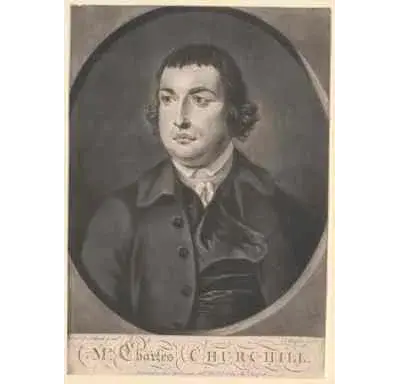
In 1761 or 1762 he became a close ally and friend with the champion of liberty of the press John Wilkes, whom he regularly assisted with The North Briton weekly newspaper. His collaboration with Wilkes thereafter earned him an honourable place in the history of parliamentary democracy and civil liberties.
