Book of Timothy Quotes
Let a woman learn in quietness with all subjection. But I permit not a woman to teach, nor to have dominion over a man, but to be in quietness.
This is one of the biblical passages which cause some Christian Fundamentalists to prescribe a secondary and subjugated role for women. Also the view that women, like children, should be seen and not heard. Also it supports those who object to women in the ministry or the priesthood or in senior teaching positions. See {587063}. It is useful to note that much of Islam which preaches a similar view of females, probably learned it from Christianity which preceded Islam by almost 600 years.
New Testament, 1 Timothy, 2:11
Sourced by: Eigen's Political and Historical Quotations

Within Christianity there has been a continual debate regarding a woman’s proper role in society in general and in church affairs in particular. This quotation is often used to justify a husband’s dominant role over the wife. Also it supports those who object to women in the ministry or the priesthood. See {587062}. It is useful to note that much of Islam which preaches a similar view of females, probably learned it from Christianity which preceded Islam by almost 600 years.

This is the earliest surviving attempt of the Romans to formulate a legal code.


This Biblical passage has been frequently used to justify discrimination against women.

This type of religious sexism is not unique to Islam. Fundamentalist Christians place women in a secondary role as do fundamentalist orthodox Jews although both allow a man to take only one wife. The Islamic scripture tells us that the Prophet allowed multiple wives only if the man had the resources to care for the wives and all the children. 4 is the maximum.


Despite this pronouncement which kept Caliphs from being female, modern Islamic states (Pakistan, Indonesia) have had female Presidents.

Unlike some other countries, Italy has no history of successful female rulers.

Manava Dharma Shastra. This text is a part of the Hindu Holy Texts. Hindus believe that Manu was a prophet whose text is revealed or inspired.
The decree prevents a married woman from obtaining a passport without her husbands written approval. The reference to criminals is because the Egyptian Constitution and the United Nations Declaration of Human Rights provides the right of any Egyptian to travel or leave the country except for criminals who have been properly adjudicated.


Jinnah was a modern Islamic reformer as this quotation demonstrates. Pakistan is not as backward as most of the Arab Islamic countries on the role of women. There are many Pakistani businesswomen and professionals. Pakistan has even had a female president. However, the fundamentalist Islamic forces that dominate the culture constantly preach and advocate the literal interpretation and following of Sharia which calls for a traditional, subservient traditional role for women; “honor killings” are common; “a rapist cannot be convicted on a female victims testimony; there are calls for the killing of adulteresses and other primitive throwbacks. Jinnah’s vision has not come to pass yet.

In one of the earliest claims that women should be allowed to preach, she made a theological argument and then challenged the male theologians to better her arguments. Although she was very demur, intellectually and theologically she “took it right at them.” Such intellectual aggression by women was virtually unheard of.


al-Mansur Abu Ali. The Caliph was trying to return to Muslim Fundamentalism.


The Bible and the Church have been the greatest stumbling blocks in the way of women’s emancipation.
The most important documents and doctrine of most churches were created by men who also established the framework of the religion. The result has in almost all cases been a sexist structure with women having not only little power not typically females are banned from all church governance. See {640303} for her quote on religion in general vis a vis women.
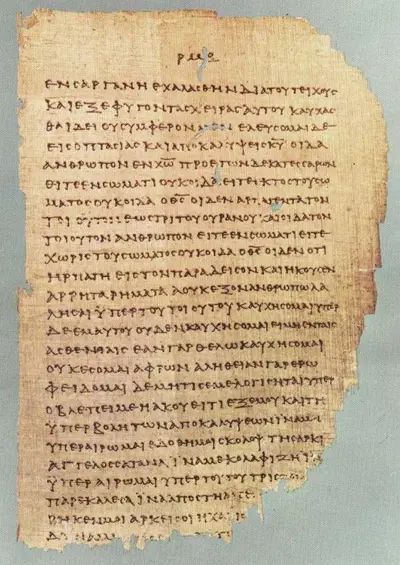
The pastoral epistles are a group of three books of the canonical New Testament: the First Epistle to Timothy (1 Timothy) the Second Epistle to Timothy (2 Timothy), and the Epistle to Titus. They are presented as letters from Paul the Apostle to Timothy and to Titus. They are generally discussed as a group (sometimes with the addition of the Epistle to Philemon) and are given the title pastoral because they are addressed to individuals with pastoral oversight of churches and discuss issues of Christian living, doctrine and leadership. The term "pastorals" was popularized in 1703 by D. N. Berdot and in 1726 by Paul Anton. Alternate nomenclature for the cluster of three letters has been proposed: "Corpus Pastorale," meant to highlight the intentional forgery of the letters as a three-part corpus, and "Letters to Timothy and Titus," meant to emphasize the individuality of the letters.
