Friedrich Ebert Quotes
Without democracy there is no freedom. Violence, no matter who is using it, is always reactionary.
Ebert, Friedrich. Schriften, Aufzeichnungen, Reden. Vol. 2, Carl Reissner, 1926.


This quotation is a great demonstration of how much wiser and the better politician of all the crowned heads of Europe that Queen Victoria was. There were stirrings of freedom and desire for parliamentary government throughout Europe. Queen Victoria, even though and perhaps because she was a young woman, had a great feel for fairness and reasonableness and had read a great deal of history. There were some radical red socialists calling for complete radical revolution scaring European Royalty profoundly. They reacted very conservatively and with reaction, reverting to more tyrannical practices of the past urged in that path by very conservative, right wing advisors. Victoria also had little respect for some of the monarchs who had little interest in their people and much with their personal power and wealth. In the end, it was England which was the only nation which never had a serious radical socialist / communist threat, and that had much to do with Victoria’s political acumen and wisdom.


Historically, this is not exactly true. Sometimes the same threat--like international Russian-dominatd communism--spans several generations, and there are a few where there was no new threat and arguably no threat at all. The period from 1880-1910 for exaple had no threat to freedom other than the American monopolists and Industrialists, but they had been a threat even before that. Trump's basic point, however, that there are often new threats to freedom emerging and we must confront that threat.

Written when only a teenager.

This is one of the more passionate and colorful descriptions of Conservatives in the political literature. The conservative party were called Orangists as they were supporters of the monarchy of William V, Prince of Orange. As in modern times the conservatives included the upper classes, business people, religious advocates. The political conservatives were passionate, respected established authority, and in general, reactionary. The tended even then to flip-flopping as the conservatives had several factions--business conservatives, religious conservatives, monarchial conservatives, authoritarian conservatives and others. Depending on which faction was most powerful at the time, conservatives might advocate one position and change later when another faction was in control. Valckenaer also had some choice words to reflect his disdain for them. It is noteworthy that this description could describe political conservatives in almost any time period, in any culture. For example, it might have been a liberal writing about the Tea Party Republicans in 2014.


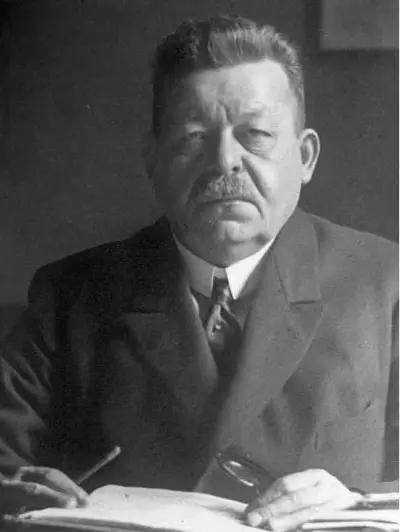
Friedrich Ebert was a German politician of the Social Democratic Party of Germany (SPD) and the first President of Germany from 1919 until his death in office in 1925.
