Immanuel Kant Quotes
With men, the state of nature is not a state of peace, but war.
Kant, Immanuel. Perpetual Peace and Other Essays. Translated by Ted Humphrey, Hackett Publishing, 1983, p. 111.


Many modern psychologists would disagree with James as they would argue that the pugnacity is learned from culture and environment.


The general was expressing a principle that is believed to this day by many policy makers, military people and civilians: Once a war has begun, one must not stop it until victory has been attained. It is unacceptable to negotiate an end to hostilities unless the enemy has been badly beaten on the battlefield. There is this view that “honor” would be lost and that enemies and even allies will not respect you and think the nation is weak and fearful. So there would always be extensive pressure to keep on fighting and not negotiate until there is a military dominant position.

He was ironically observing that most animals and primitive humans, there is fighting among the species but rarely do the fight to the death. One usually gives up, and the other will let him retire from the fight. The fighter who is getting the worst of it, will retire from the battle. However, “civilized” humans will fight for principles and ideas often to the death. “Civilized humans” also think ahead and will strive to exterminate an enemy and kill even after surrender or submission.

Kennedy was an admirer of Hitler and convinced that democracy was finished in England. His views—see also {610121} and {610122}—destroyed his own political career in the United States, and he thereafter maintained his political aspirations through his children.


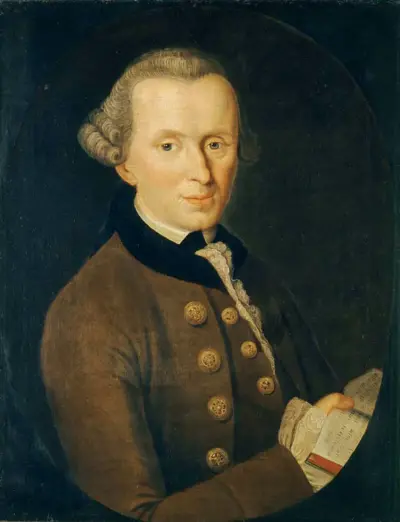
Immanuel Kant was a German philosopher and one of the central Enlightenment thinkers. Kant's comprehensive and systematic works in epistemology, metaphysics, ethics, and aesthetics have made him one of the most influential figures in modern Western philosophy.
