Albert Lutuli Quotes
Who will deny that thirty years of my life have been spent knocking in vain, patiently, moderately and modestly at a closed and barred door? What have been the fruits of moderation? The past thirty years have seen the greatest number of laws restricting our rights and progress, until today we have reached a stage where we have almost no rights at all.
Albert Lutuli, 1898-1967, President-General of the African National Congress, South Africa, Quoted be Nelson Mandela at his trail, July 1964
Sourced by: Eigen's Political and Historical Quotations


The Boers were lower class, uneducated, farmers from Holland who came to South Africa before the English did. They were at the bottom of the Dutch socioeconomic ladder. Unlike the English who were interest in establishing a trading colony, the Boers just wanted to own and farm the land and use blacks as slave or cheap labor. The Dutch Government and Trading companies lost interest in South Africa as there were much more profitable parts of the world, and they felt no obligation to the Boers whom they were glad to be rid of. So the Boers found themselves having to follow the British laws and rules of the British Colonial Office. Slavery was outlawed, and Blacks could be educated and become citizens under British law. They could own land, and contest the right of the Boers who had settled in some uninhabited land and some that was owned by Black tribes. The Blacks outnumbered the whites in general and the Boers, and there were educated Blacks who “outclassed” the still relatively uneducated Boers. So the Boers, fighting for their “way of life” set up their own area in Southern Africa and claimed independence. But Blacks claimed that it was their land and looked to the British to exercise English law. The Boer war ensued. Although the Boers lost the war, the bred at a much faster rate than the English, many of whom did not even have their families in South Africa. By the end of WWII, the Boer white majority controlled the government and kept the majority Blacks from voting and having full citizenship rights. They dominated Apartheid South Africa until the Black Revolutionists obtained control and although Black and white relations are better in South Africa than most countries, the extemeist Boers and most militant Blacks are in political, but not violent, conflict. Churchill and the British have always perceived themselves as being caught in the middle between the Boers and the Blacks.


Senator Glen Taylor was arrested on May 1, 1948, in Birmingham, Alabama by police commissioner Eugene "Bull" Connor, for attempting to use a door reserved for African Americans, rather than the whites-only door, while attempting to attend a meeting of the Southern Negro Youth Congress. He was subsequently convicted of disorderly conduct. It is hard to believe that such a thing happened in America but it did. ER was one of the few Democrats to condemn such behavior. She took a great deal of criticism from the Southern Democrats for this column. They claimed she called White Southerners “Stupid.”


The country was in the midst of fighting WWII and Burma was one of the battle fronts.


She was one of the first prominent white southerners to denounce racial segregation.

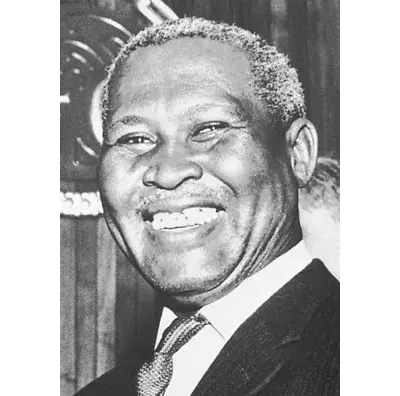
Inkosi Albert John Luthuli, also known by his Zulu name Mvumbi (English language: continuous rain), was a South African teacher, activist, Nobel Peace Prize winner, and politician. In 1952, Luthuli was elected president of the African National Congress (ANC), at the time an umbrella organisation leading opposition to the white minority government in South Africa. Luthuli ended up serving until his accidental death. He was awarded the 1960 Nobel Peace Prize for his role in the non-violent struggle against apartheid. He was the first person of African heritage to be awarded the Nobel Peace Prize. Luthuli was a lay preacher of the United Congregational Church of Southern Africa (UCCSA) based at its Groutville Congregational Church in Stanger, KwaZulu-Natal, where Luthuli was laid to rest upon his death in 1967.
