William McIlvanney Quotes
Who thinks the law has anything to do with justice? It's what we have because we can't have justice.
McIlvanney, William. Laidlaw. Hodder and Stoughton, 1977.


The Senator was arguing against a bill to correct an aspect of the immigration law where infants and very young clildren are broght to the United States by parents who entered illegally. The children grow up in the United States—the only country and home that they have ever known. American law required that they be deported to “their countries” which they have no memory of and many do not even speak the language or know the culture. Sessions, is an example of the view that law defines justice. Therefore laws cannot be unjust nor can enforcing the law. Opponents point out that even in the United States we have, in earlier times, “enforced the law” which we came to regret and see as an injustice. The Fugitive slave laws, the Southern racial discrimination laws, and the law allowing Japanese American Citizens to be interned and lose their land during WWII are a few examples of laws, the enforcement of which is seen by most Americans as having been unjust. The execution of “witches” in early America was in conformity with the law.


Bruce is one of the few American Comedians to so offend the political establishment that he was constantly legally harassed throughout his career. He was actually criminally convicted in New York for obscenity. In 2003 he was posthumously pardoned by the New York Governor, the first posthumous pardon in state history.

He was concerned about trials of high profile corporate executives for white collar crimes. He defended the CEO of Worldcom which was forced into the largest bankruptcy in American history by fraud. His client was convicted and sentenced to 25 years in jail, longer than his life expectancy. Much of the motivation of the prosecution was to set an example, send a message, and show that white collar crime is taken seriously.

Jacques Anatole Francois Thibault


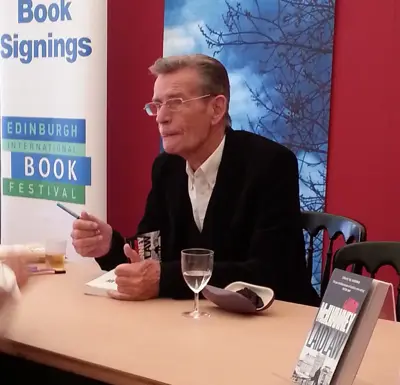
William McIlvanney was a Scottish novelist, short story writer, and poet. He was known as Gus by friends and acquaintances. McIlvanney was a champion of gritty yet poetic literature; his works Laidlaw, The Papers of Tony Veitch, and Walking Wounded are all known for their portrayal of Glasgow in the 1970s. He is regarded as "the father of Tartan Noir" and as Scotland's Camus.
