Earl Warren Quotes
It is the spirit and not the form of law that keeps justice alive.
Warren, Earl. "The Law and the Future." Fortune, Nov. 1955, p. 107.


The Senator was arguing against a bill to correct an aspect of the immigration law where infants and very young clildren are broght to the United States by parents who entered illegally. The children grow up in the United States—the only country and home that they have ever known. American law required that they be deported to “their countries” which they have no memory of and many do not even speak the language or know the culture. Sessions, is an example of the view that law defines justice. Therefore laws cannot be unjust nor can enforcing the law. Opponents point out that even in the United States we have, in earlier times, “enforced the law” which we came to regret and see as an injustice. The Fugitive slave laws, the Southern racial discrimination laws, and the law allowing Japanese American Citizens to be interned and lose their land during WWII are a few examples of laws, the enforcement of which is seen by most Americans as having been unjust. The execution of “witches” in early America was in conformity with the law.


The Senator was referring to the immigration laws which many, including him, thought were unjust, unfair, racist and discriminatory.


Watkins was the first Dallas County Black DA. He was being interviewed because DNA testing proved that a man who had served 30 years in prison for rape and robbery, could not have committed the crime, and he had just been released. Watkins quotation was very significant because it set forth a philosophy that while extant in other areas of the country is almost unheard of in Texas, where there have been more innocent men convicted than in any other state. DAs in Texas usually fight every attempt to examine old evidence with modern tools.


He is remembered today as the "Hanging Judge" of the American Old West. The two statements of his motto are contradictory unless all trials were perfect and all police, prosecutors, defense lawyers, defendants and witness always told the truth, and never made mistakes. This judge never followed the basic principle laid down by Blackstone regarding criminal law. See {594956}.


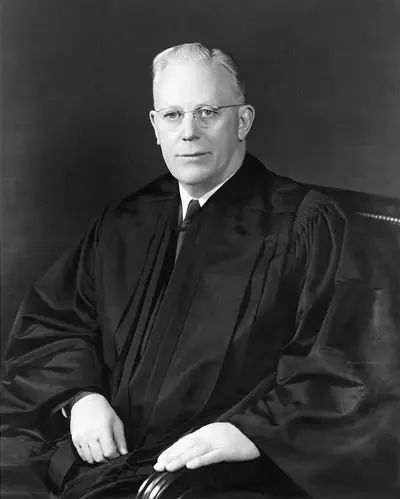
Earl Warren was an American politician and jurist who served as 30th governor of California from 1943 to 1953 and Chief Justice of the United States from 1953 to 1969. The "Warren Court" presided over a major shift in American constitutional jurisprudence, which has been recognized by many as a "Constitutional Revolution" in the liberal direction, with Warren writing the majority opinions in landmark cases such as Brown v. Board of Education (1954), Reynolds v. Sims (1964), Miranda v. Arizona (1966) and Loving v. Virginia (1967). Warren also led the Warren Commission, a presidential commission that investigated the 1963 assassination of President John F. Kennedy. He is the last chief justice to have served in an elected office before entering the Supreme Court, and is generally considered to be one of the most influential Supreme Court justices and political leaders in the history of the United States.
