Danny K. Davis Quotes
Whether the struggle was between English merchants and the American colonies, pre Civil War northern manufacturers vs. southern slave holders, or American grain farmers and auto manufacturers seeking advantage in the Mexican agriculture and labor markets in the 1990s, U.S. policy has reflected the economic clash of interests of the day.
United States, Congress, House. Representative Davis speaking on Trade Policy. Congressional Record, Government Printing Office.


Hoover, a brilliant administrator, seems to have been on the wrong side of most economic issues.


Earlier, Jefferson was opposed to manufacturing in America as factories were a social blight in Europe which he wanted to keep out of the United States. He felt that we could import whatever we needed from Europe and not have the evils of industrialization. However, with the War of 1812, the Barbary Pirates and his mellowing when no longer President, and his willingness to change his positions as he learned more, he issued this letter. See another the following year: {615634}. His was considered such an important change of position—today we would accuse him of a flip flop— that other journals and periodicals reprinted the letter and commented upon his change. Despite his changed position, most Americans believe that Jefferson was opposed to manufacturing and industrialization for his entire life—not just the first part.

At the time, Australia would not allow Asians in the Country and the United States had severely curtailed Oriental immigration. Ironically, in the 21st century the United States and most of the “white” nations had opened their markets to Asian imports and China, Taiwan, Korea, Thailand all were dominating consumer manufacturing and were in free competition with white labor but there were still de facto restrictions on immigration and Asian guest workers in most white nations.


In October 2025 (ahead of ongoing trade negotiations), the Ontario Provincial Government (Canadian) produced a video ad distributed in the US using a voice-over of the above quote from a 1987 Ronald Reagan Presidential Radio Address. The ad uses five complete sentences from the five-minute weekly address, but they are spliced together out of sequence. Also, while the ad implies Reagan was against tariffs, it omitted the context that he was using the radio address to announce new tariffs imposed on Japan by his administration but that they should be seen as an unavoidable exception to his basic belief in free trade as the key to prosperity. He said, “our commitment to free trade is also a commitment to fair trade.” President Trump accused the Ontario government of producing a fraudulent ad and of attempting to influence the US Supreme Court as it prepares to hear arguments about the legality of Trump’s tariffs. As a result, the Trump administration terminated trade negotiations with Canada.

He was describing England before the Industrial Revolution. The manufacturer / artisan owned his own home and had a small garden. He was not paid very well, but if business was slow his family could subsist by growing his own food and animals. With the Industrial Revolution came specialization as well as mechanization. If business was bad hundreds or thousands of workers had no way to make a living.
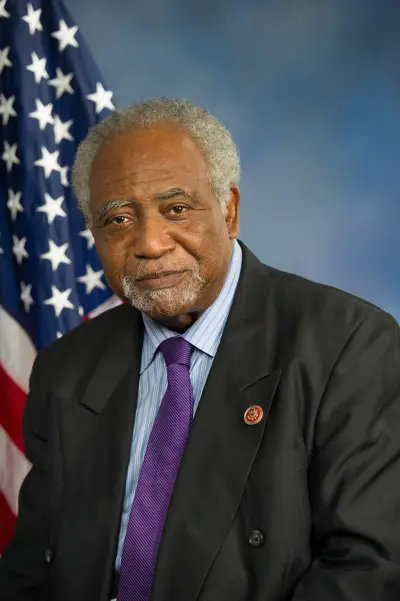
Daniel K. Davis is an American politician who is the U.S. Representative from Illinois's 7th congressional district, elected in 1996. The district serves much of western Chicago, including the Loop. It also includes several of Chicago's inner western suburbs, such as Bellwood, Oak Park, and River Forest. Davis is a Democrat, a member of the Congressional Black Caucus, and is also one of five members of the Democratic Socialists of America (DSA) serving in Congress. Davis was one of 31 U.S. Representatives who voted against counting the electoral votes from Ohio in the 2004 presidential election.
