Andrew O'Meara Quotes
When you fire, two marksmen must identify the sniper you fire at. You first fire to chip the cement or wood near him and scare him; and then you fire to wound him, and only as the last resort do you fire to kill him.
Andrew O’Meara, U.S. Army General, Orders regarding returning sniper fire in Panama, riots, January 9, 1964
Sourced by: Eigen's Political and Historical Quotations

The general had reported to the Czar that he had peacefully dissipated a protesting mob without firing a shot. The Czar felt that the absence of shooting and killing protesters would simply encourage more protests. See {613675}.

This incredible statement was made by the Governor when in the aftermath of Hurricane Katrina she had been given exaggerated reports of attacks on police and looting. She activated the Louisiana National Guard units which had military police training and was announcing it. The National Guard however was under good discipline and were well trained so their officers and training prevented them from shooting people. The New Orleans police department however was even before Katrina one of the worst in the nation. Some of the police officers took the Governor’s statement as the OK to shoot in situations where such deadly force was against the law. There were 9 police shooting deaths. In most of the cases, the victims were unarmed and were not even fleeing. The U. S. Justice Department has indicted some New Orleans policemen in the shootings. Some argue that the Governors statement could have been a major factor in giving the green light.


This general perception led the Founding Fathers to place profound restrictions on the allowable role of the military in national law enforcement—a condition that exists to this day.


Veterans of WWI had been authorized a bonus by Congress, and had been issued certificates, but Congress had not appropriated the money to redeem the certificates. Veterans of World War I formed a “Bonus Army,” some twenty thousand unemployed veterans and a like number of family members arrived in Washington DC with their hurting families and sett up a shantytown across the river from Capitol Hill. They demanded of Congress their bonus pay. Instead President Hoover castigated them and authorized the U. S. Army to disperse the veterans. General Douglas MacArthur commanded the troops and in one of the great disgraces of the United States, he used excessive force, MacArthur attacked women and children with infantry, cavalry and tanks. Governor Bartlett was in Washington at the time and became an eye witness in an era where there was no television.

1st Baron Macaulay. When there were riots or violent demonstrations in those days, the demonstrators would break up the street pavements and use the stone blocks to throw at police or soldiers. Change, reform and revolution has often occurred in England, the United States and several other democracies without riots or violent demonstrations. The Civil Rights movement demonstrations in the South often turned violent, but the violence never came from the protestors, but those opposed whose violence was condoned by the police often produced by the police themselves.

At the time the Democratic Politicians of the South went to extremes from refusing to register Black voters to countenancing assault, torture and even murder of Blacks who organized voter registration. When the racists switched to the Republican party, is was Republican politicians who tried to make voter registration and voting more difficult for minorities, but the means and degree of these efforts were very mild compared to what is was when Rustin uttered this quotation.


In 1848 a pro-slavery mob in Washington DC Gamaliel Bailey's anti-slavery publication, The National Era, which soon thereafter was the publisher of the serialized Uncle Tom's Cabin. Hale introduced a bill in the Senate outlawing rioting in the District of Columbia. The Southern Senators objected violently and this served as a catalyst for the for the most extensive public debate that had ever been held on the slavery issue. Hale probably intended this. He was the first public anti-slavery Senator.

This is an excellent example of a rhetorical technique of taking programs that the candidate opposed but seemed to be popular and instead of giving reasons for his opposition to the programs, he associated them with the demonstrations and riots that were ongoing as if the programs caused the violence.


This quotation illustrates degree of hatred that the French had for the English for the hundreds of years of their European superpower rivalry.

He was arguing that the government should be able to prohibit public demonstrations on the grounds that the protesters are “irresponsible power.” This position has been taken sometimes by the American right, and is common in all totalitarian states.

The queen was reacting to the so called “Rebecca Riots” in Ireland. She was a very gentle and forebearing woman, but if pressed and the government was in her view in the right, she would crack down on seriouslawbreakers. This balance is one of the hardest things for a ruler to attain and she was masterful at it.


A privately produced anti-Muslim video was used by Muslim activists throughout the world to whip up violent protests of the United States, Many people were killed. The President was explaining to world leaders the Western view of the importance of protecting free speech, even that which is blasphemous or hateful. One problem of course is that the Islamic holy scripture, The Koran, requires that a blasphemer be put to death. The Jewish and Christian Old Testament proscribes the SAME punishment, and there have been American Christians who have called for a return to literal Mosaic Law. Also ultra-orthodox Jews in America and Israel. The difference of the West is that literal interpretation of the Bible has been given up and the various Biblical Death penalties (including disobedient children and adulterers) and much of the Muslim world has not. For most of the West, democracy has tempered literal religion. For the Islamic world, literal religion has inhibited and obstructed democracy.

Lowery was one of the senior Black leaders in the civil rights movement of the late 1950s and early 1960s. In this interview, he was describing the atmosphere in Mobile, Alabama. Clergy of most faiths were active in the Civil Rights Movement in the South with the exception of the Roman Catholic Church which was very institutionally conservative. The Catholic leaders had a problem in that Catholics had been heavily discriminated against in early America and this prejudice was heaviest in the South in the 20th century. They feared that Catholic Activism against the status quo would create more problems for Catholics so they were not very helpful or supportive. This was NOT true for Catholics in general. Many individual Roman Catholics marched in the demonstrations, and some Catholic clergy from outside of the South came to the Southern protests and demonstrations. In the 20th century, the Catholic Church was divided between social activist reformers and in some cases revolutionists and the conservative wing of the Church who had supported the status quo.

The Confederate Civilian & Military Authorities in the Confederate Capital were grossly insensitive to the perceptions and opinions of the women of the South. This statement was a classic example. It also indicates the terribly serious plight the Confederacy was in at the time. Just as the leadership deluded themselves into thinking that the women of Richmond would riot and loot for “license ” and not for shortage and want of necessities, they did not face the reality of their strategic military situation.
There was a large contingent of whites who showed up—many invited and expected and many who came on their own.

J. Edgar Hoover, the racist FBI Director, and the Chief of Police of the all white Washington DC Police Force, had made phone calls and sent memos to as many important people they could reach, warning that there was bound to be violence if 100,00 militant Blacks tried to march on Washington. There were twice that number planned for by Bayard Rustin, the man in charge of the March planning, but 250,000 showed up. There were very few incidents and no injuries and deaths as a result of some brilliant planning by Rustin and the cooperation of Attorney General Robert F. Kennedy—the President’s brother—with Rustin. However, the fear spread by Hoover and others caused the major league baseball games to be cancelled, liquor stores to be closed, stores and offices throughout the city were intimidated and closed. But it was one of the best organized and peaceful social/political demonstrations in history.

Hirsh had uncovered CIA illegal surveillance of anti Vietnam war protesters in the late 1960s. They broke two sets of laws. First, the CIA had no authority to investigate and track American Citizens anywhere but particularly American citizens. Second, the FBI which did have the authority to investigate Americans, were not allowed to use the methods that the CIA did. They violated not only Federal Law and Rules, but also violated the 4th Amendment Rights of thousands of citizens.

The Muslim Brotherhood Government had just been deposed by a popular coup d’etat carried out by the Egyptian military. The Brotherhood flooded into the streets to protest the coup and some of them attacked police with weapons. The military overreacted and in an effort to clear the demonstrators from the streets killed hundreds of them. This brought out signs like this.

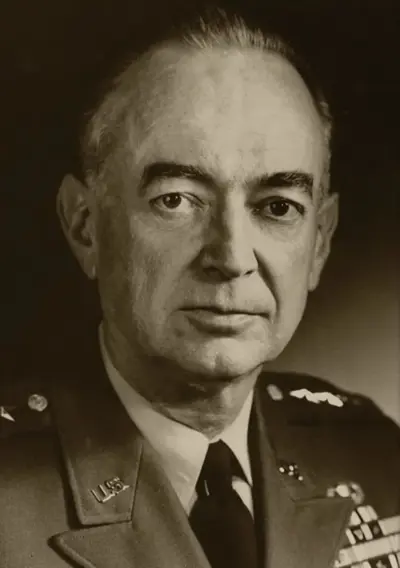
Andrew Pick O'Meara was a United States Army four-star general who served as Commander-in-Chief, United States Southern Command from 1961 to 1965, and Commander-in-Chief, United States Army Europe/Commander, Central Army Group from 1965 to 1967.
