Jean-Bertrand Aristide Quotes
When you care about human beings, you do your best to not repress and to not let people to repress and to not arm people to repress.
Aristide, Jean-Bertrand. Interview by Nicolas Rossier. Aristide and the Endless Revolution, Baraka Productions, 2005.


The Cherokee were settled Indians with farms and ranches. These lands were coveted by many whites and many including President Andrew Jackson was trying to get the Cherokee to trade their land for land in the Oklahoma Territory, despite the white promises of the past Ross took the case to the Supreme Court which ruled that the Cherokee land was theirs and it must be protected for them by the government. But President Andrew Jackson, disobeying the Supreme Court Opinion, forced the Cherokee at gun and bayonet point onto the Trail of Tears to Oklahoma, totally reneging on this quotation and deeds and promises of the past.


Although Wedgwood was a business man and ceramic manufacturer, he was a staunch abolitionist. He made these medallions by the thousands and gave them to all who would receive them. The text became the motto of the anti-slavery society. It was one of the first examples of a logo – a symbol for a political cause being very effective.

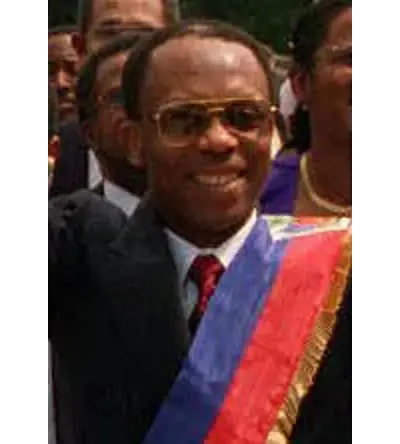
Jean-Bertrand Aristide is a Haitian former priest and politician who became Haiti's first democratically elected president. A proponent of liberation theology, Aristide was appointed to a Roman Catholic parish in Port-au-Prince in 1982 after completing his studies to become a priest of the Salesian order. He became a focal point for the pro-democracy movement first under Jean-Claude "Baby Doc" Duvalier and then under the military transition regime which followed. He won the Haitian general election between 1990 and 1991, with 67% of the vote. As a priest, he taught liberation theology and, as a president, he attempted to normalize Afro-Creole culture, including Vodou religion, in Haiti. President Aristide was briefly president of Haiti, until a September 1991 military coup. The coup regime collapsed in 1994 under U.S. pressure and threat of force (Operation Uphold Democracy). Aristide was then president again from 1994 to 1996 and from 2001 to 2004. However, Aristide was ousted in the 2004 coup d'état after right-wing ex-army paramilitaries invaded the country from across the Dominican border. Aristide and many others have alleged that the United States had a role in orchestrating the coup against him. Aristide was later forced into exile in the Central African Republic and South Africa. He finally returned to Haiti in 2011 after seven years in exile.
