Carl W. Ford Jr. Quotes
When we routinely fail to produce the new knowledge policy makers desperately need, they lose confidence in us. Who can blame them? Smart guesses aren’t worth spit.
Carl W. Ford Jr., Assistant Secretary of State for Intelligence, Statement about the intelligence gathering and analysis community, Quoted in New York Times, May 14, 2006
Sourced by: Eigen's Political and Historical Quotations


The CIA did not have a long tradition. It was created after WWII when the OSS was are espionage organization had been disbanded In the early days of the Cold War, the CIA went rogue and engaged in covert activities without the knowledge and approval of the President and his cabinet. General Maxwell Taylor conducted a thorough investigation and the agency was brought under control. There hav been several more incidents since then and every few years there have been additional scandals of unauthorized operations which were harmful to American interests and values. In a democracy it is always hard to control a secret organization. Actually, at the beginning of WWII, we had almost no espionage capability and President Roosevelt had a series of friends who provided him with intelligence until William Donavan had time to establish the OSS which did such a wonderful job.

even though in this case the objective The State Department, the Defense Department and most important President Kennedy had decided to get rid of Diem. Most of the Central Intelligence Agency thought that this was a very unwise policy, because Diem was a known risk, and the people who would replace him and their talents and policies were unknown. The negatives of Diem—the facts that he, a Christian, was persecuting the majority Buddhists, was totally corrupt, and not a very good leader was less distressful to the CIA than to the President and the other agencies as the intelligence agency frequently not only tolerated “offensive” allies, but actually employed them including war criminals. Another importance of this quotation is that it shows that it was by no means certain that the CIA would always follow the orders of the President and the government policy makers. Colby, who was not the agency director at that time but was the head of the South East Bureau, was one high level official who argued that the policies should always be followed even if they were unwise or foolish. Another importance of this quotation is that it illustrate a common error that administrations are frequently forced to make: making a policy decision to eliminate a problem while not having much of an idea of what the alternative or consequence would be when the policy is implemented. The Syrian Civil War in 2013 was a good example. The Government side appeared to have used Chemical Warfare on Civilians and public opinion demanded that we do something. However, having a no-fly zone or any of the alternatives to prevent (punish) the government for the Chemical Warfare would strengthen the rebel side which was made up of numerous factions—some of which were known Islamic fundamentalist terrorists and jihadists. If the balance of power were tipped toward the rebels, the consequence for the American national interests were unknown—just as the consequence of ousting Diem was unknown and turned out to also be bad and was probably worse.

Most of the successful intelligence agency administrators think that Cheney and some others are absolutely wrong that there should not be any discussion. There are times, of course, where secrecy is critical, but that does not mean that there cannot be classified discussion and coordination. Almost every one of the disastrous intelligence agency fiascos, could have been avoided if there were more and wider discussion in the planning. In many cases, Chaney, William Casey and others who hold their view prefer no discussions is that lawyers cannot block the operation on grounds of illegality. Or other agencies cannot get their priorities into the mix. If the NSA had discussed their plan to hack into the telephone calls of our most important allies with the State Department, the plan might not have gone through or if it had, the President would have been consulted. The Bay of Pigs was based on a set of assumptions that were not true and our government had a number of experts who could have debunked the assumptions the CIA planners were counting on which did not pan out.


Even the CIA and the other U. S. Intelligence missed predicting the Arab Spring, but so did the intelligence services of all our allies, Russia, China and even Israel which usually has the best intelligence in the Middle East. One of the reasons he argues is that media and technology played such an important role in facilitating the Arab Spring and the intelligence agencies do not really understand the new media world. The people who do some argue are too young to ever be in enough key positions in these agencies to have much influence.

On May 11, 1998, India exploded a nuclear bomb. The CIA and the NSA were caught flatfooted. They had no inkling of such an event, and found out about it when the Indian Government announced it. The entire world balance of power had shifted and the United States had no warning despite the fact that the Indian Prime Minister and other Officials had publicly stated that they were working on a nuclear bomb. The American Warning System had failed totally. That is what prompted McCarthy’s statement. However, many key people at the CIA were angry at their old colleague for so dramatically drawing attention to what they regarded as a slip up. Later, when she returned to the CIA, there was much contention and she was fired by Republican Director Porter Goss, but the details of the circumstances have never been made public.


She was explaining why she supported the Iraq War which the George W. Bush administration started claiming that Iraq had weapons of mass destruction. After invading Iraq, it turned out that the “intelligence” was wrong—there were no WMDs. Many believe that the intelligence was fabricated to justify a war that Bush, Vice President Cheney and the neo-conservatives wanted for other reasons.


He was the Chairman of the Senate Judiciary Committee.

The intelligence agencies had in many cases not shared critical information with the oversight committees and the White House and in a number of cases actually lied to them.


This was one of the great blunders of the Central Intelligence Agency in American History. As the Central Intelligence Agency was writing this report the Russians were landing missile components in Cuba. Within days the Cuban Missile Crisis would erupt. The Central Intelligence Agency also missed the Communist Takeover in China, the fall of the Berlin wall, the implosion of the Soviet Union, the Hungarian Revolution, the Iran Revolution, the Russian invasion of Afghanistan, and the Arab Spring just to list a few of the most dramatic events about which they failed to have any information in advance. At the same time they claimed that there were nuclear weapons in Iraq leading to the Iraq war and claimed the Soviets were on a track to have a better military and stronger economy—see {635791}.

The Central Intelligence Agency had a hand in the assassination having smuggled in the weapons. However, the government takeover plan did not go as expected and there was no clear alternative plan to go to.

Joseph Stalin had just died and the Central Intelligence Agency heard about it when the rest of the word did. The problem with inadequate intelligence was in great part caused by Dulles himself who had run covert operations often at the expense of Intelligence. That pattern has been a problem ever since. See {634965}.

His concern was well placed. For over half a century thereafter, the tail did wag the dog, and while there have been many successful covert operations, the risk and current pressure siphoned off talent and management attention from intelligence—the Central Intelligence Agency’s primary job.

The questioned policy was that of the NSA collecting metadata on virtually all phone and other electronic communications made in or into the United States. The issue of the unconstitutionality was not then settled, with some federal courts and bodies saying Yes and other saying No.

The scandals of the past of CIA lies to Congress and the President, mistakes they had made, and a raft of illegal activities, had eroded support for the agency. We still had the NSA and the Military Intelligence Agencies which had not been involved in the CIA scandals.
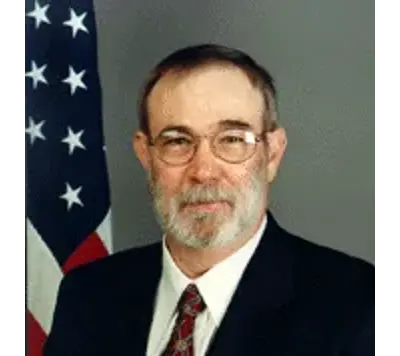
Hon. Carl W. Ford, Jr. (born 1943), is an American political scientist, consultant, defense administrator, and Asian specialist originally from Hot Springs, Arkansas. As Assistant Secretary of State for Intelligence and Research, he headed the Bureau of Intelligence and Research (INR) in the State Department from 2001 until 2003. He reported directly to then Secretary of State Colin Powell.
