Sandra Day O'Connor Quotes
When I went to law school, which after all was back in the dark ages, we never looked beyond our borders for precedents. As a state court judge, it never would have occurred to me to do so, and when I got to the Supreme Court, it was very much the same. We just didn't do it.

This is a principle that most American jurists would applaud, with the exception of the very far right that does not even want foreign law consulted by the courts even for “useful knowledge” that they might contain. This is the most formalized and sophisticated compendium of laws of the so-called “barbaric peoples” of Europe. The compilation was in many ways a documentation of the traditional laws of the Visgoths that had evolved over hundreds of years.

There is a school of thought that argues that American courts should NEVER look at the opinions of foreign courts. They argue that our legal system is determined by the Constitution and American Laws as well as the English Common Law. They believe that no consideration or weight should by given to court opinions even from Canada or Australia. Most jurists agree with Breyer. Foreign legal precedents should be examined to see what might be learned but should not be determinatitive.


Individual countries are bound only by the treaties and compacts that they have signed and ratified. So very often someone will allege that a country has violated international law, but that nation may not have signed the Treaty or Compact that binds them, so thy may not be in violation at all whereas some other country in similar circumstances would be. Also, many countries (including the United States) sign treaties but take exception to some of the provisions. Then there are not bound by that provision. This is what makes International Law so complicated and difficult to understand.


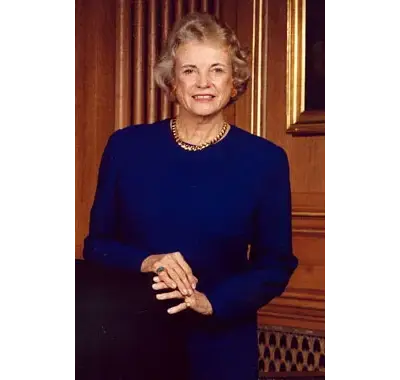
Sandra Day O'Connor is a retired attorney and politician who served as the first woman associate justice of the Supreme Court of the United States from 1981 to 2006. She was the first woman nominated and confirmed. Nominated by President Ronald Reagan, she was considered the swing vote for the Rehnquist Court and the beginning of the Roberts Court.
