Pierre Laval Quotes
Some countries worry about reciprocity … --that is if their courts hear suits claiming violations of international law in other countries, those countries will retaliate by entertaining suits against them.
Pierre Laval, U. S. Federal Appellate judge, Leslie H. Arps Memorial Lecture, New York City Bar Association, 2012
Sourced by: Eigen's Political and Historical Quotations

Prior to that the accepted phrase was “Law of Nations,” but soon after Bentham first used “International Law” it caught on and became widespread in the English Language. See Columbia Law Review, Vol. 5, No. 2, February 1905


This was an amazing leap in the inducement of foreign trade. The Visigoths valued foreign trade so highly that they realized that many foreign merchants would not come to “barbarian lands” for fear of running afoul of local “barbarian” laws. To motivate trade, they actually gave up their legal sovereignty. Rome and the other larger markets did not have to make such concessions. This is the most formalized and sophisticated compendium of laws of the so-called “barbaric peoples” of Europe. The compilation was in many ways a documentation of the traditional laws of the Visigoths that had evolved over hundreds of years.

The Senate refused to ratify.


There is a school of thought that argues that American courts should NEVER look at the opinions of foreign courts. They argue that our legal system is determined by the Constitution and American Laws as well as the English Common Law. They believe that no consideration or weight should by given to court opinions even from Canada or Australia. Most jurists agree with Breyer. Foreign legal precedents should be examined to see what might be learned but should not be determinatitive.

This Government Instruction to British North African Consular Personnel summarized the policies of the British government with regard to British citizens who run afoul of the law while in Morocco and other North African countries. Essentially, the British almost always insisted on a treaty with the foreign governments that gave jurisdiction to the British Counsul to try any Englishman who was accused of a crime. The national government could not put a British Subject on trial of punish him regardless of the crime. Where local people were the victim of the alleged crime, the national government could send an observer to the trial that the British consul held. To many, this was arrogant and insulting to the host governments. As high handed as it seems, there were and still are great problems with differing concepts of justice, different rights protected and different levels of corruption. In many countries “important” local officials can control or influence the decisions of courts, witnesses can be easily bribed lie, and even judges can readily be bought. Even today, the issue of criminal jurisdiction is one of the most important subjects of negotiations between nations. The United States has similar agreements with Afghanistan, Iraq, Korea, Germany, Japan and other nations where we have armed forces. Generally, the better and more sophisticated and honest the host government justice system is, the more willing modern nations are to allow them jurisdiction over criminal matters. But generally, in the world today, these treaties are the exception. Most criminal jurisdiction is with the national government where the alleged crime takes place.


The US Congress passed the Magnitsky Act which allowed parties to sue in American Courts, Russian companies and individual wrongs committed against Russian Citizens in Russia. (The Russian prison system controlled by some corrupt powers in Russia had killed Magnitsky for exposing some massive corruption of some Russian officials. Although morally justified, legally the act was an interference in another nation’s internal affairs.) The Russians then banned the adoptions which actually hurt them far more than the U. S., but it was a retaliation which to maintain their dignity and sovereignty the Russians felt was necessary. It is an excellent example of the lack of predictability and reaction to various foreign policy moves. Retaliation could take any form, related or not, proportional or not, rational or not.
Individual countries are bound only by the treaties and compacts that they have signed and ratified. So very often someone will allege that a country has violated international law, but that nation may not have signed the Treaty or Compact that binds them, so thy may not be in violation at all whereas some other country in similar circumstances would be. Also, many countries (including the United States) sign treaties but take exception to some of the provisions. Then there are not bound by that provision. This is what makes International Law so complicated and difficult to understand.

It is a huge surprise for modern Republicans to discover that the great Republican President, Theodore Roosevelt, advocated strengthening the power of the World Court. 21st century Most Republicans consider this court and other international tribunals to be infringements on American sovereignty, and politicians who agree with Roosevelt as traitors.


While other nations have occasionally adopted laws and legal approaches of other countries and sometimes after being conquered have had their legal code rewritten to be more like that of the conqueror, this may be the only example of a nation having a major legal reform driven by compatibility with the major powers of the day.
There is no court structure that handles International law disputes. There are some international bodies that hear some types of international law disputes, but no general mechanism. The procedures of these few bodies are very complex and arcane. But worse, there is no body with any power that can enforce any decision that may be reached. Enforcement depends on the good will of the nations involved or the pressure that can be brought to bear by other counties.

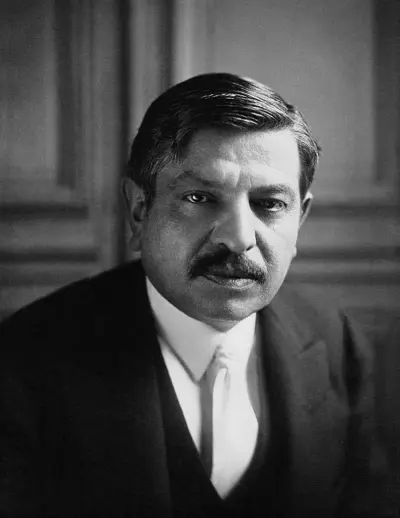
Pierre Jean Marie Laval was a French politician. During the time of the Third Republic, he served as Prime Minister of France from 27 January 1931 to 20 February 1932, and a second time from 7 June 1935 to 24 January 1936.
