Sidney Hook Quotes
What may, under proper judicial safeguards, sometimes be justifiable and moral measures against the enemies of the democratic system, can never be legitimately employed against one's (political) opponents within that democratic system without calling all the axioms of democracy into question.
Sidney Hook, 1902-1989, Political Philosopher, Comment on Watergate, Speech, "Where Have All the Heroes Gone?" Washington DC, February 27, 1977
Sourced by: Eigen's Political and Historical Quotations


The marshal was embarrassed by his assignment to arrest this famous, elderly woman. He refused to handcuff her, gave her time to change her clothes, and took Anthony by streetcar to the courthouse trying to keep as low a profile as possible while Anthony was making speeches all the way about her unjust arrest. She was found guilty and fined $100 which she never paid.


the assassination of John Kennedy 3 days earlier


This quotation is historically important because Davis clearly states the reason for the rebellion of the South. The anti-slave states were growing at a greater rate than the slave states and despite the greater voting power that a southerner had (a result of the 3/5 count of slaves for census purposes, and the Senate), the handwriting was on the wall and the majority of the United States was against the vicious institution of slavery and would make it unprofitable, impossible and/or illegal in the coming years. Southern slavery advocates saw this as a “tyranny of the majority” and therefore took up arms. In the early 20th century, apologists for the Southern rebellion tried to promote the idea that there were reasons other than slavery, but this quotation and the resolutions of the states who withdrew from the Union make it clear that the right to maintain slavery was the only significant issue. In that sense it was a States’ Rights issue, but the South was opposed to States’ Rights when it came to States refusing to return fugitive slaves when Federal Law required such under the Dred Scott Supreme Court Decision.


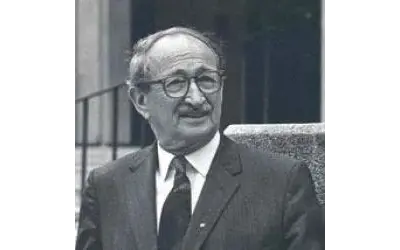
Sidney Hook was an American philosopher of the pragmatist school known for his contributions to the philosophy of history, the philosophy of education, political theory, and ethics. After embracing communism in his youth, Hook was later known for his criticisms of totalitarianism, both fascism and Marxism–Leninism. A pragmatic social democrat, Hook sometimes cooperated with conservatives, particularly in opposing Marxism–Leninism. After World War II, he argued that members of such groups as the Communist Party USA and Leninists like democratic centralists could ethically be barred from holding the offices of public trust because they called for the violent overthrow of democratic governments.
