Rene Cassin Quotes
We were thus led to organize ourselves, as men who had fought the war together, in order to support those statesmen who had truly understood the lessons of that World War, thus attempting to prevent its recurrence.
Cassin, René. "The Charter of Human Rights." Nobel Lectures, Peace 1951-1970, edited by Frederick W. Haberman, Elsevier Publishing Company, 1972.


3rd Earl Russell of Kingston. The military weak nations agreed with him, but the militarily strong ones did not—especially America and England which had the Atomic Bomb when others did not.

One major problem at the time was that the Soviet Union was supporting and instigating revolutions in many parts of the world. When most nations of the UN wanted to provide peace keeping troops to quell the conflict, the Russians would veto and block the effort, Vandenberg wanted the UN to change the rules regarding the veto. The original right of veto for the major nations was originally included at the insistence of the United States and many Americans did not want to give it up or have any exceptions lest there be more. The Russians at that time also did not want to give up any of their veto powers. Another method that Vandenberg wanted to solve the Russian peacekeeping blockage problem was for America to engage in more collective security pacts so that action could be taken without UN Security Council unanimity by going around the UN.


Clark, a conservative, was one of those who did not believe that the United Nations or any international organization have any enforcement powers but should just be a forum for deliberation. By the end of the 20th century one of the major conservative complaints about the United Nations was that it could not enforce its resolutions and was a paper tiger.


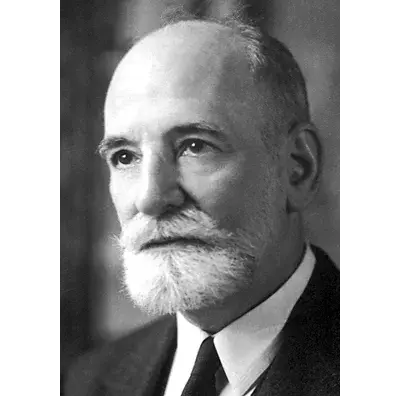
René Samuel Cassin was a French jurist known for co-authoring the Universal Declaration of Human Rights and receiving the Nobel Peace Prize.
