Elihu Root Quotes
How is it that nations composed of people who don't want war are continually fighting?" The answer is that the opinion against war has been without adequate institutions to give it effect. War is an international affair; and to prevent it there must be international opinion, and international action upon that opinion, and international institutions to give effect to that opinion.
Elihu Root, 1845-1937, U. S. Secretary of War & U. S. Secretary of State, U. S. Senator (Republican, NY), Nobel Laureate in Peace, “Steps Towards Preserving Peace”, Foreign Affairs, April 1925
Sourced by: Eigen's Political and Historical Quotations

3rd Earl Russell of Kingston. The military weak nations agreed with him, but the militarily strong ones did not—especially America and England which had the Atomic Bomb when others did not.


His appeal was also in the name of concurring heads of state of Finland, Holland, Denmark, Norway, Luxemburg, and Sweden.


Actually it was the United States which insisted in the veto which required consensus of the great powers of the time. It was Russia which ended up using it far more often than any other nation.

The Republican controlled Senate had turned down the ratification of the League of Nations presented by Democratic President Wilson, and looked like they would turn down any international treaty even if presented by a Republican President. This statement allowed the treaty ratification by only a few votes. However, after that the Senate turned down our participation in the Permanent Court of Arbitration at the Hague. See {640099}.

Hitler ridiculed the letter after receiving it in public speech.


This was in the middle of the Cold War and the political leaders had to face the fact that their major military nuclear weapons, as a practical matter, could not be used. The result was not only too destructive but retaliation would produce MAD: Mutually Assured Destruction.


Son of John Jay. Father of Harriet Beecher Stowe and Henry Ward Beecher


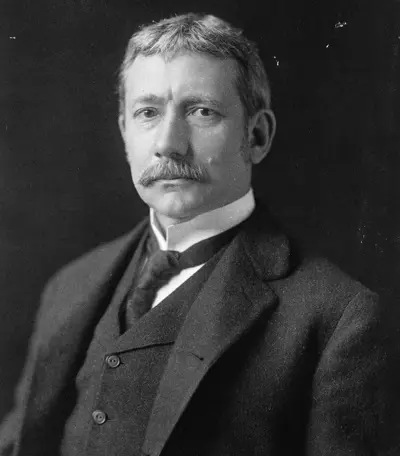
Elihu Root was an American lawyer and statesman who served as Secretary of State under President Theodore Roosevelt and as Secretary of War under Roosevelt and President William McKinley. He moved frequently between high-level appointed government positions in Washington, D.C. and private-sector legal practice in New York City. For that reason, he is sometimes considered to be the prototype of the 20th century political "wise man", advising presidents on a range of foreign and domestic issues. He was elected by the state legislature as a U.S. Senator from New York and served one term, 1909–1915. Root was awarded the Nobel Peace Prize in 1912.
