William Jay Quotes
War might be instantly banished from Europe, would its nations regard themselves as one great society, and by mutual consent, erect a court for the trial and decisions of their respective disputes.
Son of John Jay. Father of Harriet Beecher Stowe and Henry Ward Beecher
William Jay, 1789-1858, Jurist & Reformer, Founder, American Bible Society President, American Peace Society, 1842
Sourced by: Eigen's Political and Historical Quotations


Actually it was the United States which insisted in the veto which required consensus of the great powers of the time. It was Russia which ended up using it far more often than any other nation.

When he made this statement, the United States was the only nation that had the atomic bomb, but he and other leading nuclear scientists realized that it would not be long before the Russians would also have nuclear weapons, and other countries would so follow suit. He and some others saw a world government as the best way to cope with the nuclear proliferation problems. However, there was too much diversity of values and political ideology in the world to be accommodated in a single government, and the United Nations was the only thing that was practical and that was far from a government and had virtually no sovereignty. However, during the Cold War, Russia and the United States agreed on a Nuclear Proliferation Treaty and most nations of the world, agreed, so that for the issue of nuclear proliferation, the world had a type or world government—an international treaty. However, India and Pakistan did not adhere to it and developed nuclear weapons and North Korea was never a signatory. Other countries like Iran began to evade the treaty and since there was no real world government it was difficult to enforce the treaty throughout the world.


One major problem at the time was that the Soviet Union was supporting and instigating revolutions in many parts of the world. When most nations of the UN wanted to provide peace keeping troops to quell the conflict, the Russians would veto and block the effort, Vandenberg wanted the UN to change the rules regarding the veto. The right of veto for the major nations was originally included in the UN Charter at the insistence of the United States, and many Americans did not want to give it up or have any exceptions lest there be more in the future. The Russians at that time also did not want to give up any of their veto powers. Another method that Vandenberg wanted to solve the Russian peacekeeping blockage problem was for America to engage in more collective security pacts so that action could be taken without UN Security Council unanimity by going around the UN.


Clark, a conservative, was one of those who did not believe that the United Nations or any international organization have any enforcement powers but should just be a forum for deliberation. By the end of the 20th century one of the major conservative complaints about the United Nations was that it could not enforce its resolutions and was a paper tiger.


This was a very important statement for the President to make. At the time there was a very conservative right wing that was advocating withdrawing from the UN or at the very least not paying such a large share of the UN funds for operation.


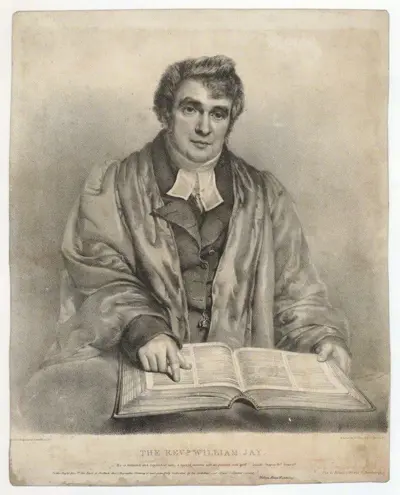
The Rev. William Jay was an English nonconformist divine who preached for sixty years at Argyle Chapel in Bath. He was an eminent English Congregationalist minister of Regency England.
