Al Gore Quotes
We should place priority on the development of safeguards against unwise, permanent alterations in the human gene pool. Now that we have become principle agents of evolution, it is crucially important to recognize that the pursuit of short-term goals through human modification can be dangerously inconsistent with the long-term best interests of the human species.
Gore who generally was a progressive on almost all issues, was quite conservative when it came to human genetic manipulation and cloning. Scientists for whom Gore was a favorite politician based on his leadership of digital technology and the Internet and his Nobel prize winning work on environmentalism, but his stance in this quotation was puzzling to many.
Albert Gore Jr., U.S. Senator (Democrat, TN), Vice President of the United States (Democrat, TN), Nobel Peace Laureate, The Future: Six Drivers of Global Change, 2013
Sourced by: Eigen's Political and Historical Quotations

Actually, while such selective breeding is possible in all animals, the selection for a single trait almost always produces other unintended and unanticipated traits and these could be devastating to the “new generation”, unpleasant, benign, or anything else. At the time selective breeding was the only possible tool to produce “desirable” traits in an animal or to eliminate what someone things of as “undesirable” traits. Today, our understanding of the human genome and genetic engineering offers a much more reliable possibility of affecting animal traits without as many risks of random and unintended consequences that are present with breeding.


What he thought was conceivable in the 1970’s seemed almost certain to come to pass 30 years later. Scientists had already altered the evolution of various plants and animals, and the complete human genome had been sequenced. The question will be not whether man will be able to control and modify his own evolution, but how should this be done and who should decide it. We have realized that man has already—unintentionally—altered the evolution of many species from passenger pigeons which are now extinct and the dog which coevolved with humans. Arguably, man’s development of the ability to control his own evolution is an evolutionary development itself. One great question for society is whether it is better to alter evolution unknowingly or in a planned, relatively controlled manner. For man to participate in the design of human evolution will be the nightmare of the Creationists who insist that evolution is too complicated to be somewhat of a random process and that there must be a designer who they assume is God. When man becomes the designer, that will be very disturbing. For most theologians, there will be little difficulty with the notion that God chose the mechanism of evolution and chose humans to give the intellect and knowledge to implement and design the evolutionary process.


40 years later, it was clear that he was correct about the possibility of man directing his own evolutionary future. It was also clear that man was doing just that by his effect on his own ecosphere and other humans. However Beadle envisioned an intentional planned set of actions, taken by society as a whole. However, in most counties the political system has not been very facile at examining the alternatives with the advice of scientists. In the United States about half of the politicians reject the information provided by the overwhelming majority of the scientists, and the great challenge was whether in the future man will knowingly and with forethought affect his evolution or with ignorance and unintended consequence will do so.
He and others have already done it. Joyce's lab at the Scripps Research Institute was the first to produce a self-replicating in vitro system, capable of exponential growth and continuing evolution, composed entirely of RNA enzymes. Most politicians do not understand much about evolution and many actually believe that evolution has not been proven an is not what governs the development of species. And at some point these men and women will have to come to grips with this scientific reality and decide what if any restrictions there should be on the human control and manipulation of the evolution of different species.


He was commenting on a proposal many in public health were making of using modern technology, genetic and chemical, to wipe out the mosquito population and thereby eliminate Zika and Malaria, along with other mosquito carried diseases which do terrible damage to humans worldwide. There are some who regard the extinction of a species as a major moral and ethical conundrum. Others worry about the effect on other species if there were no mosquitos. There are many other species, including some birds and fish, that feed on mosquitos and their larvae. The in turn might become endangered or also extinct.
As early as this was in scientific history, he essentially described the process whereby new species are formed by the mutation from the old series.


This quotation illustrates how the priorities of science change over time as a result of learning more and developing new techniques and tools.


Actually, The Theory of Evolution shows no such thing. Diversity is critical for Natural Selection to function. It is the inbred Royalty of Europe that showed a propensity to various defects and abnormalities. There are millions of examples where the offspring of a couple are superior to both parents with respect to a characteristic. Some also who are inferior to both parents. Then there are some “in-between”. Traits in evolution and generics are not subject to a simple averaging.
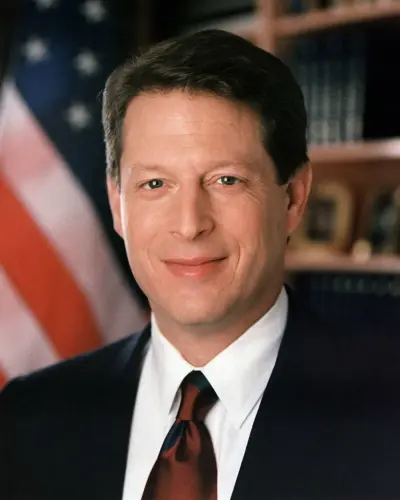
Albert Arnold Gore Jr. is an American politician and environmentalist who served as the 45th vice president of the United States from 1993 to 2001. Gore was Bill Clinton's running mate in their successful campaign in 1992 and the pair were re-elected in 1996. Near the end of Clinton's second term, Gore was selected as the Democratic nominee for the 2000 presidential election but lost the election in a very close race after a Florida recount. After his term as vice-president ended in 2001, Gore remained prominent as an author and environmental activist, whose work in climate change activism earned him (jointly with the IPCC) the Nobel Peace Prize in 2007. In 2008, Gore won the Dan David Prize for Social Responsibility.
