Henry T. Greely Quotes
If we we were to intentionally set out to cause the extinction of a species, we should think about that. I would want there to be some consideration and reflection of a social consensus before we take that step.
He was commenting on a proposal many in public health were making of using modern technology, genetic and chemical, to wipe out the mosquito population and thereby eliminate Zika and Malaria, along with other mosquito carried diseases which do terrible damage to humans worldwide. There are some who regard the extinction of a species as a major moral and ethical conundrum. Others worry about the effect on other species if there were no mosquitos. There are many other species, including some birds and fish, that feed on mosquitos and their larvae. The in turn might become endangered or also extinct.
Quoted in Jerry Adler, "A World Without Mosquitos" Smithsonian Magazine, June 2016
Sourced by: Eigen's Political and Historical Quotations


The then new biological technique of CRISPR allowed people without much scientific training and with very inexpensive equipment to splice part of one organism's DNA into the DNA of another, and then, in the case of an animal, implant the altered cells into the egg of a female of a related species and revive an animal close to an extinct species or create an one of an existing species but with some new characteristics. Greedy raided the issue of whether what might be possible was necessarily desirable.


[Other's disagree that divestiture tactics are not very useful. They do bring pubic attention to the fossil fuels threat. And divesture tends to drive the price of the coal companies down. That makes it harder to raise money to expand and mine more fossil fuels.]


Environmentalists counter with the fact that the corporate and government interests in growth at any cost will, and have in the past, found a loophole in every reasonable compromise that has been made. Reasonableness is only a device they use to slow regulation until they can either figure out a loophole or use their great fiscal resources to shape public thinking to soften or eliminate the regulation. Therefore some environments argue that they must be as ideological about the environment as the corporations are about their rights to profit and not compromise even when a compromise appears reasonable. Besides, if the corporations always appear to win, the public will think opposing them is futile. So when they can be beaten on something that is unreasonable, they appear weaker and encourage more environmental public activism.

This quotation illustrates a little known fact about America’s infectious disease history. It also reveals one of the great skills of Eleanor Roosevelt: Her ability to see a program or project in its breadth of influence and potential benefits throughout the panoply of problems facing the nation. The health fact is that malaria was a major health hazard in parts of America in the middle of the 20th century. Actually, before that time, malaria was one of the top causes of death in America. As a result of technology and programs such as this one, malaria has been virtually eliminated as a mortality risk in America.


There are a few conflicts between the legislation to protect the border by using vehicles and building facilities and protecting the endangered species that might be in the area. These were worked out by allowing the Border Patrol, if they thought there was a serious boarder problem, to make the decision of how to proceed but in the general cases to balance off the costs and benefits to border guarding and the endangered species and wilderness. Chaffetz was a rabid anti environment advocate who opposes almost all accommodations for endangered speices. Such extreme statements as these, produces an opposite extreme reaction on the part of some environmentalists who will make no compromise even if benign, as they believe that CHaffetz and the few others who think like he, will then gut the entire legislation as they are not acting in good faith. The result is a polarization in which the extreme’s fight it out and the reasonable middle ground is ignored.


Foreign species escape, multiply, and take over a habitat, destroying the natural species or effecting the plant life usually negatively.

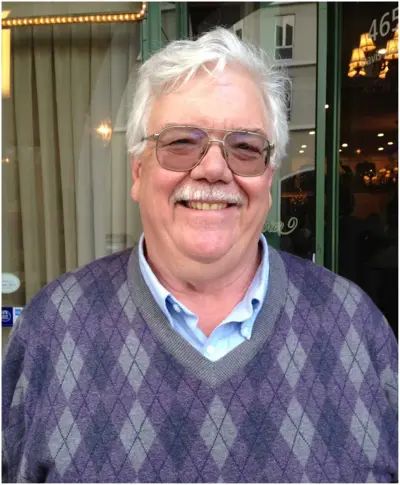
Director, Center for Law and the Biosciences; Professor (by courtesy) of Genetics, Stanford School of Medicine; Chair, Steering Committee of the Center for Biomedical Ethics; and Director, Stanford Program in Neuroscience and Society. Henry T. Greely (BA '74) specializes in the ethical, legal, and social implications of new biomedical technologies, particularly those related to neuroscience, genetics, or stem cell research. He frequently serves as an advisor on California, national, and international policy issues. He is chair of California's Human Stem Cell Research Advisory Committee, a member of the Advisory Council of the NIH's National Institute for General Medical Sciences, a member of the Committee on Science, Technology, and Law of the National Academies, a member of the Neuroscience Forum of the Institute of Medicine, and served from 2007-2010 as co-director of the Law and Neuroscience Project, funded by the MacArthur Foundation. Professor Greely chairs the steering committee for the Stanford Center for Biomedical Ethics and directs both the law school's Center for Law and the Biosciences and the Stanford Program in Neuroscience and Society. In 2007 Professor Greely was elected a fellow of the American Association for the Advancement of Science.
