Sultan bin Abdul-Aziz Al Saud Quotes
We have warned and continue to warn against calls for the division of Iraq, which come up now and then, calling for sectarian rights or minority freedoms.
Al Saud, Sultan bin Abdul-Aziz. Public address. Quoted in Reuters, 2006.


What makes the situation even more complicated is that most of the land of the Middle East has been governed by a succession of Empires who may have drawn the lines differently from the previous governing dynasty. For example, the land that is Israel today, has been governed by Egyptians, Greeks, Jews, Romans, various Arab dynasties, Turkey, England, and the Jews again. Turkey governed it for the longest period.


Churchill was reported to be so angry and exasperated that his face turned red and he was sputtering. During World War II, Gandhi, Nehru and other Indian Nationalists were leading protests against British control of India. This not only bogged down British soldiers surprising the nationalists rather than fighting in Burma or in other war theaters, but India supplied a huge number of battalions to the British Army the world over and if that manpower dried up, the allied war effort would suffer. The American State Department wanted Churchill to announce that after Japan was defeated, there would be a process toward self-government. This way, they thought, the Indians would redouble their effort to defeat the Japanese and stop the then current protests and strikes. Churchill was strongly opposed to any diminution of the British Empire, but beyond that, he knew India quite well and realized that at any hint of Independence the large Muslim minority in India would insist on autonomy or a partition of the country and use sectarian violence and terror to intimidate the Indian Congress party and the British, but the major victims of the terror—the Hindus and the Sikhs would not remain passive, but would retaliate in kind. President Roosevelt was in the midst of planning the Normandy Landings of the D-Day invasion and did not want to pressure Churchill and the British at this point in time, so the door to independence was not opened during the war and Britain had to deal with the protests throughout. However, when, after the war, the Labor Government, started a process toward Indian independence which resulted in exactly what Churchill predicted. At least 2 million Indians were slaughtered in the internecine terrorist cycles of fear and retaliation motivated terror attacks what were so extensive that the British military could not really control it.

The "trouble" was the terrorist attacks to gain an independent Pakistan that the Punjab Muslims were perpetrating against the Sikhs and the Hindus and the retaliations. At first organized in the cities they had become spontaneous and spread to the countryside. It turned out to be impossible for Governor Jenkins and the limited British troops and police to stop the violence in most places. By the end of the Partition of India hundreds of thousands of Punjabis had been killed.
He was a brutal, sadistic war criminal who was assassinated by one of his many enemies in 2000 before he could be brought to trial. This statement was typical of his outlook and behavior. He tortured and murdered Croation and Muslim prisoners. His reference to the “slaughterhouse” was to the Second World War in which the Croats were allies of Nazi Germany and created their own concentration and extermination camps where hundreds of thousands of Serbs were murdered. In the eternal memory of the cycle of revenge in the Balkans, Arkan, tried to retaliate against the Croats who had never been called to account for their crimes and even the leadership of Croatia after the Camp David accords celebrated the Fascist times when they were dominant and were able to settle accounts with the Serbs.

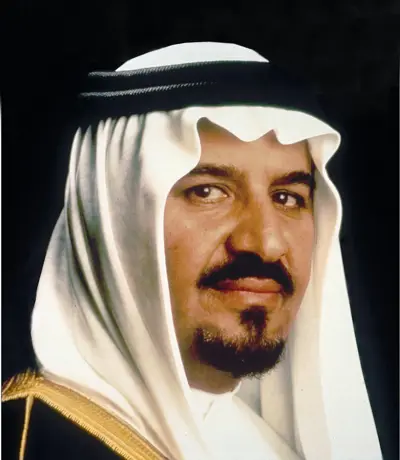
Sultan bin Abdulaziz Al Saud (Arabic: سلطان بن عبدالعزيز آل سعود Sulṭān ibn ʿAbdulʿazīz Āl Suʿūd), called Sultan the Good (Arabic: سلطان الخير Sulṭan al-Khair) in Saudi Arabia, was the Saudi defense minister from 1963 to 2011 and the crown prince of Saudi Arabia from 2005 to 2011.
