Pim Fortuyn Quotes
We have a separation of state and church. The laws of the country are not subject to the Koran.
Fortuyn, Pim. Tegen de islamisering van onze cultuur. A.W. Bruna, 1997.


In that era the favoritism of the government—especially state and local government—in favor of the of the Protestant Christians. Politicians started challenging the clear unconstitutional favoritism. The reformers were Republicans often referred to by the Democrats as “Godless Republicans”. A century later the Republicans would oppose strict separation of church and state with the Southerners and Fundamentalist Christians in their party and the Democrats fighting to maintain strict separation of church and state.


This quotation is one of the first to make the critical observation that the only time that tolerance of a religion is necessary is when there is an established church and others that deviate from it. If there is no established church, as the Founding Fathers envisioned, there is no preeminent church to do the tolerating. All are equal. In practice, Protestant churches were proportionately dominant in early America and up through the 20th century. So most of the issue of tolerance problems in America were cultural. And there is still a minority of Christians who believe that America should be a Christian country and other religions should be “tolerated.” However, Clinton and most of the founders did not want to see even general Christianity established as the national religion even they it was the majority religion.


The Senate was presented with James Madison’s Language for the First Amendment. These three alternatives were proposed and rejected. The rejected versions turn out to have been very important. Some have argued that the First Amendment does not prohibit Congress making laws regarding religion as long as it doesn’t favor one religion over another—for example pay for clerics of all religions. However, that was the third proposal and it was rejected in favor of the high wall of separation proposed by Madison.


Later, as President in 1811, Madison vetoed a bill granting Federal land to build a Baptist church in the Mississippi territory.


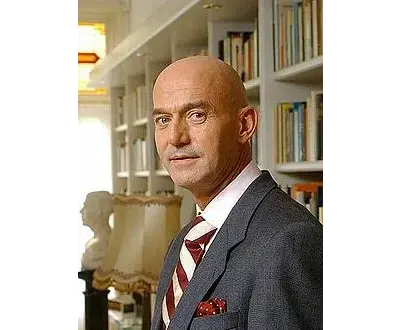
Wilhelmus Simon Petrus Fortuijn, known as Pim Fortuyn, was a Dutch politician, academic, author and businessman who formed his own party, Pim Fortuyn List (Lijst Pim Fortuyn or LPF) in 2002.
