Marco Rubio Quotes
We can't ignore the fact that this country has a legacy of racism....We cannot be a leader in the 21st century if a significant portion of our population feels locked out of the future.
One reason that this is such a noteworthy quote is that Rubio was in the midst of his campaign for the Republican Presidential Nomination where only the most dedicated and generally conservative members of the party turn out to vote in the primaries. And a very large part of them were Southern racists who switched parties in response to the Civil Rights Act passage in 1964. Since then the very conservative wing of the party has had a de facto veto on Republican presidential candidates. Rubio's statement was the view of the majority of Americans and a significant number of Republicans, but this courageous statement of his true belief's risked his chances in the primary.
Marco Rubio, U. S. Senator (Republican, FL), Campaign Speech, August 20, 2015
Sourced by: Eigen's Political and Historical Quotations

Vladimir Lenin. In their quest for world revolution, the Russian Communists had more problems with arguments in the United States whose reforms and economy had produced a very high standard of living. They knew that to effect a revolution, they had to reach the middle class and the intellectuals. They had little economically to attack America with but they were able to attack the United States morally. Even though segregation was legal in America at that time, many Americans thought it immoral. Most of the rest of the world did also. So that was one of the attack points. Since the communists opposed U. S. racial segregation, many Southern segregationists used a perverted logic and accused everyone who opposed segregation of being a communist. In addition to racial segregation, the Communists attacked other forms of discrimination such as anti-Catholic, anti-Asian, and anti-Semitic (See {638737} ) behavior.


Blacks were not allowed to testify in court in the Southern States. The reasons why has never been clear. Many slave keeping societies like Ancient Rome not only allowed slaves to testify in the courts, but required them to do so in many circumstances even when their owners were opposed.

In that year he resigned from the War Department in protest of the discrimination and racism in the armed forces.


The case was Shelley v. Kraemer where the Supreme Court outlawed discriminatory restrictive covenants A restrictive covenant was a condition that was written into the deed on a piece of property. Even if the owner of the home did not want to discriminate, the previous owners who wrote the restrictive covenant into the deed (or his relatives and heirs) could sue and invalidate the sale. In many cases, insurance would not sell title insurance or banks would not give mortgages for a Black or a Jew where there was a covenant in the deed, even if the covenant was more than 100 years old. Homeowner associations would also enforce the covenants which were originally written into all the deeds of the development. Once the supreme court ruled that restrictive covenants were unconstitutional, no court would enforce any of these lawsuits. It was one of the fastest steps forward in the history of Civil Rights since the day after the court decision racists could no longer enforce the covenants that were in tens of millions of deeds in America.


Perhaps there is no more dramatic quotation illustrating MacArthur’s arrogance where his own views and decisions should obviously prevail regardless of the policies of his superiors and his commander-in-chief. The army had been officially integrated by President Truman, The reality was that the general honestly believed that he had no superiors among the military, that civilians should not control the military, and in any event that the President—Truman—was not fit to be Commander-in-Chief.


Lame was not opposed to civil rights as some who read this quotation sometimes conclude. He did think that much of the lack of success of minorities in America could be ameliorated by many self-improvement and individual efforts. His reference to destroying America, was an interesting rhetorical technique of assuming that what you advocate is not implemented and showing that it leads to disaster. Phrased this way, it gets and focuses the attention of an audience.

In the 1930s African Americans who traveled were subject to countless humiliations whenever the sought hotels, rooming houses, restaurants and other accommodations. Gas stations would not allow them to use bathrooms and they were reduced to using open fields. Traveling and vacationing was, for Blacks, humiliating. Wikipedia: “Green reviewed hotels and restaurants that did business with African Americans during the time of Jim Crow laws and racial segregation in the United States. He printed 15,000 copies each year. In the 1930s, Green began his work by compiling data on stores in the New York area that accepted black travelers, and published his first guide in 1936. Similar guides had been published for Jewish travelers, who sometimes faced discrimination. Green's guide was so popular that he immediately began to expand its coverage the next year to other US destinations, adding hotel and restaurants as well.”


He was one of the Black intellectuals who criticized the white’s favorite Negro Leader, Booker T. Washington who concentrated his efforts on Black education and self-improvement to make them more acceptable to whites. Trotter was the first man of color to earn a Phi Beta Kappa key from Harvard University. He was an outspoken critic of President Woodrow Wilson’s policy the for the first time instituted official segregation of Federal Employment and his firing of all Blacks then in executive or white collar positions in the Federal Government. Wilson, for all his supposed modernity, was one of the most racist of all American Presidents.

Moynihan was an Assistant Secretary of Labor at the time. At the time politicians did not overtly discuss the racism that had, did then, and still does permeate the American culture. Segregation had just been made illegal but was still rampant. Many whites were highly insulted by this paper. Most Blacks were outraged at Moynihan's general thesis. So the report offended many.

The logic train from mixed blood to why lynching should not be prohibited is obscure but in filibusters Senators tended to just repeat all of their stump speeches or anything else because they had to keep talking.


Scott was then the Special Advisor on Negro Affairs to the Secretary of War in the Woodrrow Wilson administration. Wilaon hs commited U. S. Troops to fight oversease to "make the world safe for democracy", but many blacks and whites also saw gross hypocricy in asking Negores to fight for a Jim Crow, segregated America. See the related quotation 644805. Scott was also the major aide to Booker T, Washington, one of the leading Negro educators but a very pliable man on equal rights for the Blacks. The problem for the administration was much greater than that of WWII where the president was seen as very sympathetic to Blacks while Wilson was himself a racist. And in WWII the fight against the Nazis was a fight agaisnt racial supremacy. So this quotation and Scott's role was very important to the administration.
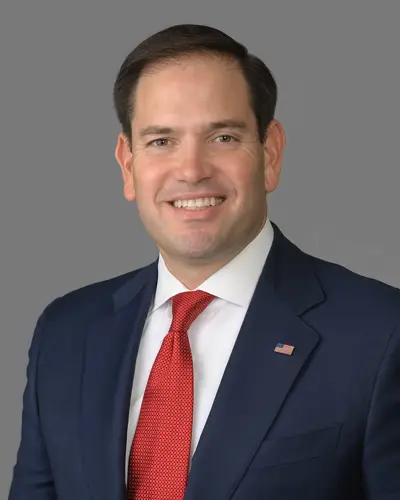
Marco Antonio Rubio is an American lawyer and politician serving as the senior United States senator from Florida. A Republican, he previously served as speaker of the Florida House of Representatives. Rubio unsuccessfully sought the Republican nomination for president of the United States in 2016, winning presidential primaries in Minnesota, the District of Columbia, and Puerto Rico.
