Charles D. B. King Quotes
We cannot afford to destroy the native institutions of the country. Our true mission lies not in the building here in Africa of a Negro state based solely on Western ideas, but rather a Negro nationality indigenous to the soil, having its foundation rooted in the institutions of Africa and purified by Western thought and development.
Liberia was founded by American free Negroes who emigrated. From the beginning there has been a tension between the American founders and their decedents and the indigenous tribes. King, who had just been elected President, was trying to balance the interests and values.
Charles D. B. King Liberian Presidential Inaugural Address January 5, 1920
Sourced by: Eigen's Political and Historical Quotations


The Negro World, Garvey’s Newspaper, was the country’s largest Black newspaper. The statement brought great distress to white Europe whose colonial interests were threatened.


Half a century later there were many Asian countries which had adopted democratic style governments. While Kennan was right at the time, what he did not anticipate is the rapid rise of communications technology and the consequent expansion of American cultural values. The Asians became different people, and when they did so, they adopted democratic forms of government albeit more heavily guided by strong leaders than America and other industrial democracies.
The Jews and Arabs for years shared Palestine. But the Jews spread out over the world, becoming modern and Westernized in the process. When the Jews returned to Palestine as a part of the Zionist movement, they were more modern, Westernized, and culturally at odds with their old Arab cousins, whose cultures had atrophied. The Arabs resented the Westernized culture that was being introduced into the Middle East. One point of view is that had Israel not tried to introduce moderism and Western ideas into the Middle East, the Jewish State might have been more accepted. However, not only did they bring a foreign perspective (democracy), education and techmology and capitalism to the area, but they far outpassed the Arab nations in agriculture, industry, science, medicine and general standard of living. The Arab dictators and monarchs had always had the excuse for poverty that the land was so poor that it simply could not be developed, but Israel developed the worst of the land in the area with no oil or natural resources. Every day of Israeli prosperity and scientific achievement was an embarassment for the rest of the Middle East where even the rich oil countries were not improving the lot of the average citizen.
His is one extremist view of Jerusalem. Most historians agree that both Jews and Arabs have lived in Jerusalem since recorded history. Extremists on both sides of the Arab Israeli debate have constructs which deny the existence of the other group. Sisalem is one. Both the Palestinians and Jews claim Jerusalem as their capital and both have reasonable historical claims, and both have shared the city for thousands of years.


Buleihi is one of the few Arab intellectuals who are not totally negative about Western colonialism and interference in the affairs of other countries who he believes benefit from the Western influence and have developed such an insularity that they will not be changed or modernized otherwise.

His views are a mix of modernism and fundamentalism. He favors democracy and elections but also favored the Taliban destroying the great ancient Buddha statues when he was called an idol worshipper for urging the preservation of art.

Tito did not realize how right he was. The class issues were relatively easy to resolve into a unified nation, but the ethnic, national, and religious difference and historical hatreds and conflicts were held together during Tito’s lifetime, as he was a very strong leader committed to multiculturalism and imposed it on all of Yugoslavia. However, when he did in 1980, Yugoslavia rapidly flew apart into ethnocentric independent cultures which then went to war with each other.


“Young Chinese” referred to members of a Chinese political party—Young China—consisting mainly of Western-Educated young Chinese who were a strong force for change, but did not have the experience, money, or power connections to unify the country or operate the government. The Japanese watched Chinese politics very carefully as China was seen as a potential rival or a teritory of conquest.
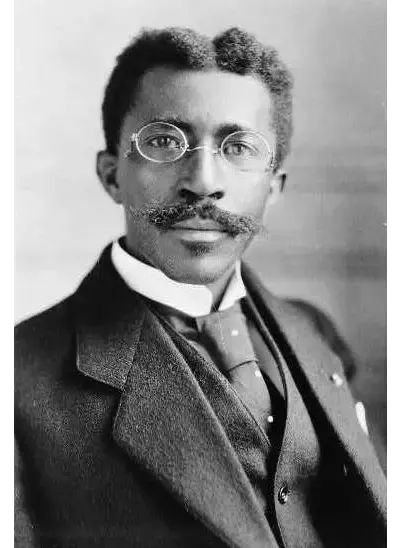
Charles Dunbar Burgess King was a politician in Liberia of Americo-Liberian and Freetown Creole descent (his mother was an Americo-Liberian). He was a member of the True Whig Party, which ruled the country from 1878 until 1980. He served as the 17th President of Liberia from 1920 until 1930.
