Josip Broz Tito Quotes
No country of people's democracy has so many nationalities as this country has. Only in Czechoslovakia do there exist two kindred nationalities, while in some of the other countries there are only minorities. Consequently in these countries of people's democracy there has been no need to settle such serious problems as we have had to settle here. With them the road to socialism is less complicated than is the case here. With them the basic factor is the class issue, with us it is both the nationalities and the class issue.
Tito did not realize how right he was. The class issues were relatively easy to resolve into a unified nation, but the ethnic, national, and religious difference and historical hatreds and conflicts were held together during Tito’s lifetime, as he was a very strong leader committed to multiculturalism and imposed it on all of Yugoslavia. However, when he did in 1980, Yugoslavia rapidly flew apart into ethnocentric independent cultures which then went to war with each other.
Josip Broz Tito, 1892-1980, President of Yugoslavia, Speech at the Slovene Academy of Arts and Sciences, Ljubljana, November 26, 1948
Sourced by: Eigen's Political and Historical Quotations

Tito did a marvelous job of keeping the lid on the ethnic hatred that was always present. Where he failed however was that as soon as Tito died, the ethnic groups were literally at each others’ throats.
Tito did a remarkable job of suppressing the historical ethnic and religious strife among the nationalities and religious groups of Yugoslavia. Hatred and the thirst for “justice”, nationalism, and vengeance went back 1000 years in the Balkans. However, when Tito died, Yugoslavia collapsed in a resumption of the traditional inter-ethnic hatred and violence.


After Independence, the original credo of the Indonesian hero and leader was slowly ignored. The Muslim majority established Islam as the dominant religion and began to create laws that discriminated against Christians, Hindus, Buddhists, and Jews. The ethnic Chinese had been very successful in business and commerce and soon they were discriminated against and even physically attacked in Pogroms.

Most immigration reformers want to open immigration more widely. Ward wanted immigration restricted to certain ethnicities and limited. He wanted a uniformity of assimilation and not diversity.


At the time, this was a very political speech. Racism was rife in Germany and was being introduced into Italy by the Fascist government. Xenophobia was prevalent throughout Europe as WWI hatreds had been inflamed by the politicians. Bohr’s speech was considered a major attack on Fascism.


This has been a classic dilemma for all large multi ethnic states—trying to develop a sense of unity of citizenship in the face of populations who think of themselves foremost differently. Attempts like this of banning the names of the peoples from official use, banning languages, changing people’s names, requiring common dress and other such methods have failed in most cases (Ataturk’s Turkey being the notable exception). America, Great Britain and the Soviet Union showed the world that it was possible to have a strong sense of national unity and at the same time allow peoples, cultures, and ethnicities to maintain their own ethnic identities. However, many modern governments see their situation as so unique that ethnic repression of one kind or another is required. Modern China, in particular, while not as extreme as Sun Yat-Sen still makes it very difficult for certain cultures to thrive such as the Tibetans. Note that even in the United States we have many who argue that non English language usage should be discouraged and disapprove of the concept of hyphenated Americans. For example, see Theodore Roosevelt {631377}.
Before the French Revolution, Jews could freely practice their own religion in France but they could not hold citizenship, become professionals, or a host of other privileges of citizenship. Clermont-Tonnerre and other liberals argued that Jews should be given citizenship. The Jacobins--conservative Catholics close to the Papacy--opposed granting citizenship to Jews or Protestants. One argument that the Jacobins gave was that each of these sects would be separate nations within France and not necessarily have French national interest as a priority. Clermont-Tonnerre gave this response which has been the French philosophy about minority citizenship since then. Their thought was that anyone may become a French citizen as an individual but he or she should do so because he/she wants to accept French values and support the French nation. This view worked quite will over the years until the large immigration of Muslims starting in the 1960s where many new immigrants just wanted to live in France and earn a living there, but did not want to identify with French national aspirations or adopt French culture or values. America, had no such demands and those immigrants who tended to identify primarily with their country or culture of origin and not assimilate were allowed to do so, but the American way of life was so attractive that many immigrants did adopt it and even if they did not, their children almost inevitably did. That has not happened in France.

At the time Turkey and the Ottoman Empire included Egypt and most of the Middle East, Chechnya, Georgia, Armenia, Usbekistan, Ajerbaijon, Greece, Albania, Serbia, Bosnia, Croatia and other countries.


Ali was arguing that India should not be a single nation but each major ethnic group should have its own country. Pakistan was later to be separated out. However, the Akhoots, Christians, Dravidians and Sikhs did not have the same desire for separatism as the Muslims and stayed in India, and today India is a pluralistic nation which even includes about the same number of Muslims who have elected to be Indian citizens rather than Pakistani.


Islamic modernists like him are many among the educated Muslims but their views are often drowned out by the violence and extremist statements of the fundamentalists.


The population was an amalgam of Spaniards, Englishmen and other Europeans, Blacks originally brought over as slaves from Africa, and indigenous people from many different tribes.

At the time the Algerians leading the impendence movement were very secular, and were committed to modernity, multiculturalism and religious freedom and tolerance. Within Algerian Muslim society, there has been a constant battle against the right wing Islamic extremists and terrorists.
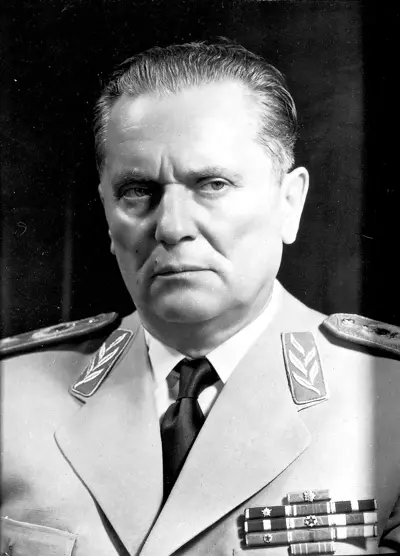
Josip Broz, commonly known as Tito (/ˈtiːtoʊ/; Serbo-Croatian Cyrillic: Тито, pronounced [tîto]), was a Yugoslav communist revolutionary and statesman, serving in various roles from 1943 until his death in 1980. During World War II, he was the leader of the Partisans, often regarded as the most effective resistance movement in occupied Europe. He also served as the president of the Socialist Federal Republic of Yugoslavia from 14 January 1953 until his death on 4 May 1980.
