Ludwig von Mises Quotes
War can really cause no economic boom, at least not directly, since an increase in wealth never does result from destruction of goods.
von Mises, Ludwig. Nation, State, and Economy. New York University Press, 1983.


Almost all economists believe that Harding had it totally wrong. WWII for example was one of the greatest increases in productivity in world history. The Civil War and the two world wars both were accompanied by many increases in industrial productivity. The losing side is usually totally devastated by war, and sometimes the winners are impoverished as with England and Russia in WWII. However, the North thrived in the Civil War and America did in WWII. Many economists say that war often impairs the economy of even a winning country in that the war expenditures generally are made at the expense of the civilian economy—infrastructure, public transportation, education, and in the decades following the war the lack of domestic investment in the war years reduces medium and long term growth.


DPs were “displaced persons” -- the euphemism for people who were no longer welcome in their country of birth. Congress, made up mostly of immigrants or the children of immigrants who were poor and downtrodden, were not enthusiastic about the United States absorbing many of the world’s DPs resulting from WWII.

The Ambassador of Bavaria represented an area where the politicians saw democrats and socialists as their great enemy, as did many of the leading right wing conservatives in all of Germany. They believed that a great war would give them a chance to crush democratic socialism in Europe. Bethmann warned that just the opposite might result, and indeed it did. He was correct. Many of the crowned heads of Europe were deposed and the democratic socialists emerged as a major political factor in the victorious democracies. Bethmann-Hollweg, however, was not a strong leader and could not prevent the Conservatives, the military leaders, and Kaiser Wilhelm from initiating WWI.


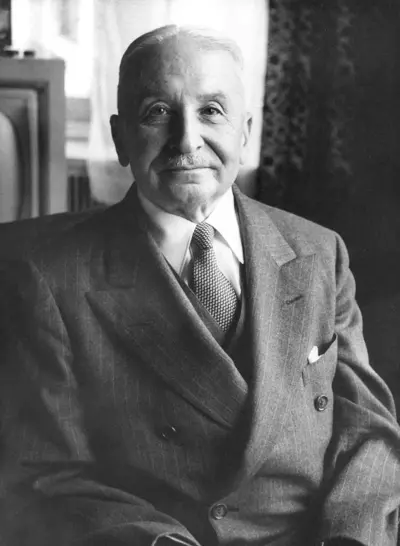
Ludwig Heinrich Edler von Mises was an Austrian School economist, historian, logician and sociologist. Mises wrote and lectured extensively on the societal contributions of classical liberalism. He is best known for his work on praxeology, a study of human choice and action.
