Eamon de Valera Quotes
Since this war began our sympathy has gone out to all the suffering people who have been dragged into it. Further hundreds of millions have become involved since I spoke at Limerick fortnight ago.
De Valera, Éamon. "Address at Cork, 14 Dec. 1941." Speeches and Statements by Eamon de Valera 1917-1973, edited by Maurice Moynihan, Gill and Macmillan, 1980, p. 456.


Almost all economists believe that Harding had it totally wrong. WWII for example was one of the greatest increases in productivity in world history. The Civil War and the two world wars both were accompanied by many increases in industrial productivity. The losing side is usually totally devastated by war, and sometimes the winners are impoverished as with England and Russia in WWII. However, the North thrived in the Civil War and America did in WWII. Many economists say that war often impairs the economy of even a winning country in that the war expenditures generally are made at the expense of the civilian economy—infrastructure, public transportation, education, and in the decades following the war the lack of domestic investment in the war years reduces medium and long term growth.


He was writing about the impending First World War.

This was one of the most accurate foreign policy assessments ever made. The next year the first Arab-Israeli war began when the state of Israel came into being. See {624566} for another accurate prediction.

This observation was made when Commander-in-Chief for the 13 American Colonies, General Edward Braddock had organized a military expedition to destroy some of the forts that the French had constructed. (See {37008}.) Braddock and the other military officers thought that the force Braddock had organized what he thought would be overwhelming force that could easily accomplish the objective. But unfortunately for Braddock, Franklin was prescient, See {583428}.


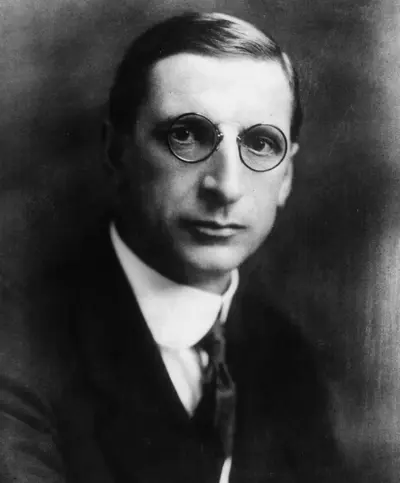
Éamon de Valera was a prominent statesman and political leader in 20th-century Ireland, serving several terms as head of government and head of state, with a prominent role introducing the Constitution of Ireland.
