Theobald von Bethmann-Hollweg Quotes
A World War with its incalculable ramifications will strengthen social democracy which sermonizes the virtues of peace. War could easily cost some rulers their thrones.
The Ambassador of Bavaria represented an area where the politicians saw democrats and socialists as their great enemy, as did many of the leading right wing conservatives in all of Germany. They believed that a great war would give them a chance to crush democratic socialism in Europe. Bethmann warned that just the opposite might result, and indeed it did. He was correct. Many of the crowned heads of Europe were deposed and the democratic socialists emerged as a major political factor in the victorious democracies. Bethmann-Hollweg, however, was not a strong leader and could not prevent the Conservatives, the military leaders, and Kaiser Wilhelm from initiating WWI.
Theobald von Bethmann-Hollweg, 1856-1921, German Chancellor, Statement to the Bavarian Ambassador, June 4, 1914
Sourced by: Eigen's Political and Historical Quotations


German ally, the Austro-Hungarian Empire had declared war on Serbia. See {642085}. The Russian Czar was under great pressure because a large Roman Catholic Empire was warring against a small Orthodox co-religionist of Russia and Russians of all classes wanted Russia to defend Serbia. The Czar was making a good faith effort to stave off the war. What he did not realize was that Germany had actually planned for war against Russia and France and was using the alliance with Austria as an excuse.

There were some British politicians who had considered the possibility of supporting the South in the Civil War to assure their supply of cheap cotton. Entering the war by allying with the Confederacy was also a possibility. Lincoln used this phrase and instructed Adams to use that with the British politicians as the result if England get involved with the American Civil war. It is the closest phrase to “World War” until WWI.

1st Viscount Grey of Fallodon


China, after overthrowing the Manchu Dynasty was struggling among many factions for control of the government.

Trieste was occupied by the British and Americans theoretically, but Tito’s Yugoslavian troops had done most of the WWII fighting and dying in the area and wanted control for the Russian Allies of which Tito was then one. There were frequent armed standoff’s of Anglo Americans and Yugoslav troops that could easily have evolved to full scale fighting. Nine months later, Tito broke with Stalin. An interesting historical fact is that Richard M. Nixon was one of the Congressional Delegation then visiting Trieste.


The “Great War” was a term then used for the First World War. He actually understated the effect on the generations. It affected more than two.


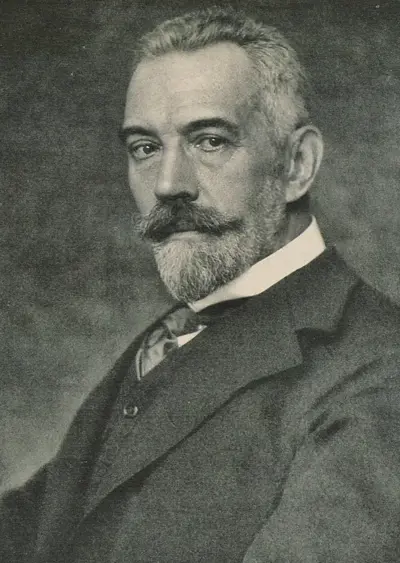
Theobald Theodor Friedrich Alfred von Bethmann-Hollweg was a German politician who was the Chancellor of the German Empire from 1909 to 1917.
