Victor H. Green Quotes
Vacations Without Humiliations.
In the 1930s African Americans who traveled were subject to countless humiliations whenever the sought hotels, rooming houses, restaurants and other accommodations. Gas stations would not allow them to use bathrooms and they were reduced to using open fields. Traveling and vacationing was, for Blacks, humiliating. Wikipedia: “Green reviewed hotels and restaurants that did business with African Americans during the time of Jim Crow laws and racial segregation in the United States. He printed 15,000 copies each year. In the 1930s, Green began his work by compiling data on stores in the New York area that accepted black travelers, and published his first guide in 1936. Similar guides had been published for Jewish travelers, who sometimes faced discrimination. Green's guide was so popular that he immediately began to expand its coverage the next year to other US destinations, adding hotel and restaurants as well.”
Victor H. Green, Writer & Publisher of Directories of Black Accommodations, The Negro Travelers' Green Book
Sourced by: Eigen's Political and Historical Quotations

In the 1930s African Americans who traveled were subject to countless humiliations whenever the sought hotels, rooming houses, restaurants and other accommodations. Gas stations would not allow them to use bathrooms and they were reduced to using open fields. Traveling and vacationing was, for Blacks, humiliating. Wikipedia: “Green reviewed hotels and restaurants that did business with African Americans during the time of Jim Crow laws and racial segregation in the United States. He printed 15,000 copies each year. In the 1930s, Green began his work by compiling data on stores in the New York area that accepted black travelers, and published his first guide in 1936. Similar guides had been published for Jewish travelers, who sometimes faced discrimination. Green's guide was so popular that he immediately began to expand its coverage the next year to other US destinations, adding hotel and restaurants as well.”


Southerners and some others wanted to discriminate and fought civil rights legislation. The excuse they gave for opposition was that the Federal Government was usurping the power of the states to determine what civil rights people of the state would have. Shellabarger made it clear that the civil rights bill would not require ANY rights to be given. It just required that if the states granted rights, they could not discriminate by race as to those rights. But the states were free to decide which rights all citizens of the state would have. See {623473} .


Incredible as it seems today, no Black person had ever dined in the White House as a guest of the President. African American servants were common. And Abraham Lincoln had received many Black visitors as had Presidents after him. But no president had ever had a Black person to dine as a social equal. The photo, reproduced here, illustrates the parity. But that was the worst thing a President could do so far as Tillman and his fellow racists were concerned. They had, since the end of the Civil war, used violence and terrorism to murder, maim and/or intimidate the Negro population to remain in an economic and socially inferior position. In Tillman’s state over these decades they had more lynchings than legal executions and there were plenty of them. Newspapers over the South riled up the whites and there was a wave of terror to be sure that the President’s importune action would not be taken as an endorsement of the Negro’s right to any equality or even dignity. This dinner essentially wedded all the Blacks to the Republican Party and all the Southern Whites to the Democratic Party. This would remain the political situation for over 60 years until the Democrats passed the LBJ Civil Rights Act in 1964 and the Republicans decided to solicit the Southern White racists who accepted the invitation and within a few years, there was a complete reversal of party loyalty of most Blacks and most Southern White Racists.


This was actually a very courageous statement for an American politician running for national office. As a result of the pressure of this statement President Franklin Roosevelt allowed Black enlistment in the Army Air Forces.


At the time, the Southern segregationists were all Democrats and they blocked any Democratic attempt to pass any Civil Rights legislation. When he could not get a Civil Rights commitment from his own party, Powell turned to the Republicans and the President wrote this letter. In return, in November, Powell endorsed and supported Eisenhower instead of Stevenson, his own party’s nominee. Eisenhower could not get any legislation on Civil Rights as the Southern Democrats would always block it. When President Lyndon Johnson finally forced the 1963 Civil Rights Act through the Congress, the racist Southern Democrats cut a deal with Goldwater and the conservative Republicans, and switched parties. Since then the Civil Rights stance of the two parties reversed. The Democrats were thereafter pro Civil Rights and the Republicans, the party of Lincoln and Reconstruction, thereafter reversed their Civil Rights position and opposed progress in this area.

There are few people today who could believe that a United States senator would castigate the head of a Federal Agency for spreading “racial equality propaganda.” But at the time—1943—the actions of Education Commissioner John W. Studebaker and his Assistant took remarkable courage.

In that year he resigned from the War Department in protest of the discrimination and racism in the armed forces.


The case was Shelley v. Kraemer where the Supreme Court outlawed discriminatory restrictive covenants A restrictive covenant was a condition that was written into the deed on a piece of property. Even if the owner of the home did not want to discriminate, the previous owners who wrote the restrictive covenant into the deed (or his relatives and heirs) could sue and invalidate the sale. In many cases, insurance would not sell title insurance or banks would not give mortgages for a Black or a Jew where there was a covenant in the deed, even if the covenant was more than 100 years old. Homeowner associations would also enforce the covenants which were originally written into all the deeds of the development. Once the supreme court ruled that restrictive covenants were unconstitutional, no court would enforce any of these lawsuits. It was one of the fastest steps forward in the history of Civil Rights since the day after the court decision racists could no longer enforce the covenants that were in tens of millions of deeds in America.


The rich whites won the class war by splitting the poor and working class with race hatred and then coopting one half—the poor whites so that neither the poor whites or blacks obtained much and even into the 21st century the poor of the American South were the worst off of all the poor in America.
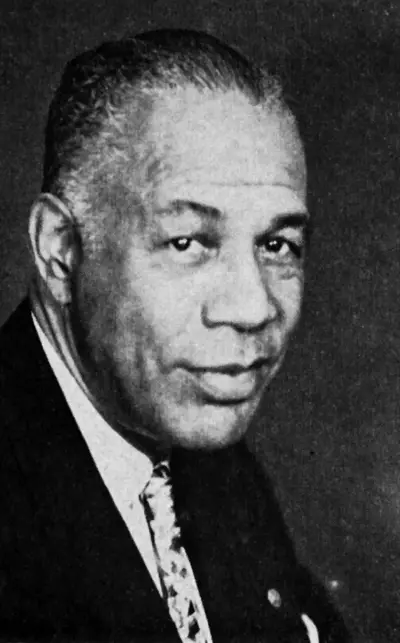
Victor Hugo Green was an American postal employee and travel writer from Harlem, New York City, best known for developing and writing what became known as The Green Book, a travel guide for African Americans in the United States. During the time the book was published, choices of lodging, restaurants and even gas stations were limited for black people in many places, both in the South and outside it. It was first published as The Negro Motorist Green Book and later as The Negro Travelers' Green Book. The books were published from 1936 to 1966. Green reviewed hotels and restaurants that did business with African Americans during the time of Jim Crow laws and racial segregation in the United States. He printed 15,000 copies each year.
