Hirohito Quotes
To strive for the common prosperity and happiness of all nations, as well as the security and wellbeing of our subjects, is the solemn obligation which has been handed down by our imperial ancestors and which lies close to our heart.
Hirohito. "Imperial Rescript Declaring War on the United States and the British Empire." 8 Dec. 1941. The New York Times, 9 Dec. 1941, p. 5.


The declaration was signed by 52 Nobel Scientists at the height of the McCarthy era.
This resolution was bad enough for its overt racism. Ironically, the major victims of Japanese aggression have been Asians—China, Korea, Manchuria, and others. “White” empires had economic interests in throughout Asia and this was what Britten and many others were concerned with protecting. This quotation is important for another reason. At the very moment Britton introduced the resolution, Charles Evans Hughes our Secretary of State was welcoming a new, very high level ambassador to Washington. The administration had decided on a negotiating initiative and Britton and other Congressmen cut the legs out from under the administrations diplomatic efforts. It was particularly bad because one of the Japanese complaints about America and other white nations was their racism and discrimination against Asians. Congress undermining Administration diplomatic efforts has an all too frequent history in America.

There was a small but influential pro-Nazi segment of British society which had a small parallel in the United States. Even the Duke of Windsor had pro-German sympathies as did the American Ambassador to England, Joseph Kennedy (father of JFK) see {610119}.

This was the first time a Cabinet Member had ever addressed Congress. He had just concluded an alliance with Soviet Russia for fighting Hitler and Japan in the Second World War. Some were uneasy about an alliance with the Communist state. However, the Congress approved overwhelmingly.


At the time America was a very minor player in the world economy and had no external military presence at all. The reason that Lafayette and others saw much of the world’s welfare dependent upon the welfare of America and the success of the American Revolution was because of the concept of a democracy and a republic as opposed to a monarchy and autocracy which was how the rest of the world was governed. If the American experiment succeeded, freedom and democracy would spread as a result of the example. If America failed, reform the world over suffered. And Lafayette was right. America survived and its influence changed virtually all of Europe and much of the rest of the world as well.


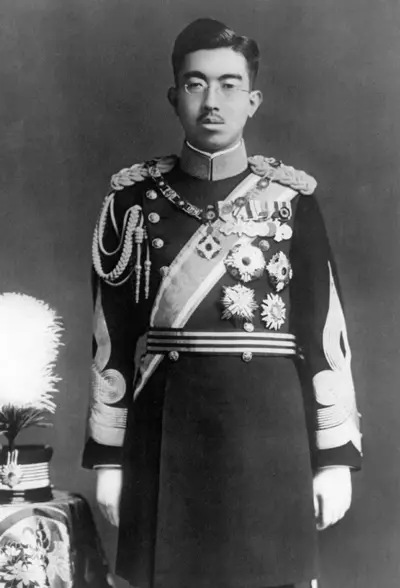
Emperor Shōwa, better known in English by his personal name Hirohito (裕仁), was the 124th emperor of Japan according to the traditional order of succession, ruling over the Empire of Japan from 25 December 1926 until 2 May 1947, after which he was Emperor of the state of Japan until his death. He was succeeded by his fifth child and eldest son, Akihito. Hirohito and his wife, Empress Kōjun, had seven children, two sons and five daughters. By 1979, Hirohito was the only monarch in the world with the title "emperor." Hirohito was the longest-lived and longest-reigning historical Japanese emperor and one of the longest-reigning monarchs in the world.
