Arthur Compton Quotes
To make the moral achievement implicit in science a source of strength to civilization, the scientist will have to have the cooperation also of the philosopher and the religious teacher.
Compton, Arthur Holly. Atomic Quest: A Personal Narrative. Oxford University Press, 1956, p. 344.

Bryan participated as a prosecutor in the infamous Scopes Trial in Tennessee where a school teacher was convicted of a crime for discussing the idea of evolution in a high school classroom. He had written this for his summary to the jury, but the summaries were dispensed with when it was obvious that Scopes would be convicted. He had admitted to breaking the law, but the law itself was on trial.


This was a radical speech for the time, suggesting reforms that had been unthinkable to most Turks. Although it is not prohibited by the Koran and early Islamic artists made some of the greatest paintings and depictions of people, fundamentalists gained control of Islam and interpreted any statue as an idol that could be worshipped and this generalized to Islamic art in general where people ceased to be depicted and even animal depictions were rare. Muslim art developed incredible geometric intricacy but tended not to depict anything that is real. This extended to photography and illustrations in books including textbooks. At the same time, not unlike some Christian and Jewish Fundamentalists, the Muslim fundamentalists opposed science and the teaching thereof on the grounds that all authentic knowledge was in the Koran and anything else was not only false but also heretical. So this speech was a type of “declaration of war” against the established religious order and culture.


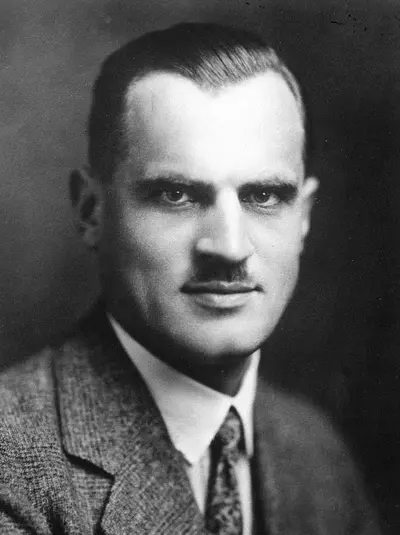
Arthur Holly Compton was an American physicist who won the Nobel Prize in Physics in 1927 for his 1923 discovery of the Compton effect, which demonstrated the particle nature of electromagnetic radiation. It was a sensational discovery at the time: the wave nature of light had been well-demonstrated, but the idea that light had both wave and particle properties was not easily accepted. He is also known for his leadership over the Metallurgical Laboratory at the University of Chicago during the Manhattan Project, and served as Chancellor of Washington University in St. Louis from 1945 to 1953.
