Deng Xiaoping Quotes
Tibet is sparsely populated. The two million Tibetans are not enough to handle the task of developing such a huge region. There is no harm in sending Han into Tibet to help.... The key issues are what is best for Tibetans and how can Tibet develop at a fast pace, and move ahead …
Some Tibetans believe that the Han Chinese will indeed develop the area, but will in the process change the nature of the area and its culture—that the Han culture will dominate just as initially minority cultures have dominated and transformed South Africa, India, Canada and even the United States. Of course, modernization per se changes a culture radically.
Deng Xiaoping, 1904-1993, Chinese Premier, Statement, 1987
Sourced by: Eigen's Political and Historical Quotations

Tibet and some other ethnic enclaves of China have been almost impervious to the general improvement in the standard of living that China accomplished at the end of the 20th century and beginning of the 21st. China is not the only nation to have this difficulty. Some would argue that America still has it with some of its Native American nations. The great challenge is trying to develop and modernize a culture that does not want to be modernized at the moment but still wants many of the benefits of modernization.

The great challenge is trying to develop and modernize a culture that does not want to be modernized at the moment but still wants many of the benefits of modernization.

Although the Premier recognizes the importance of environmental protection it is difficult for China and other developing countries to make the necessary trade off’s at the expense of slower growth which means continued poverty. Even in the United States with all its affluence, slowing economic growth for environmental reasons is politically very difficult.


In China, the religious activities of the Missionaries never really lead to the many troubles between the missionaries and the Chinese. It was their activities in the non-religious arenas articulated here by Denby.


See {641842} for her previous decree on the subject.


She was ruling the largest country in the world and Denby’s opinion was held by most who knew China. What made her all the more remarkable was that, as a Chinese lower middle class women, she had no formal education, had rarely been allowed to travel out of her home or interact with men. As a young teen she was made a concubine to the Emperor and rarely left the harem. Like Abraham Lincoln she was self-taught and not only was able to seize power in China without any male advisor or patron, but she ruled as well as any world leader. In her later years she was pushing her country too fast and far, and the Western Powers had caused much domestic difficulty and to maintain power, she had to ally with the anti-West Boxers causing her reputation amongst Westerners to sink dramatically and thereafter was never much acknowledged for her remarkable political skills and accomplishments.


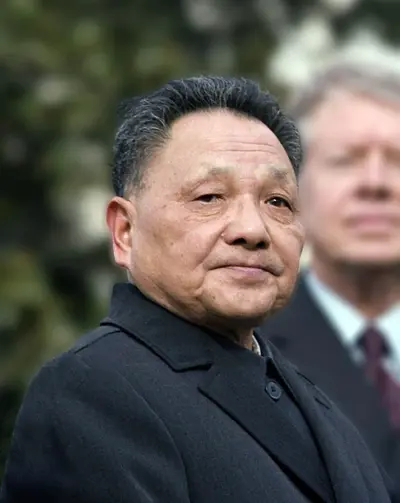
Deng Xiaoping was a Chinese revolutionary and statesman who served as the paramount leader of the People's Republic of China (PRC) from December 1978 to November 1989. After Mao Zedong's death in 1976, Deng gradually rose to supreme power and led China through a series of far-reaching market-economy reforms, earning him the reputation as the "Architect of Modern China".
