John Locke Quotes
Thus the law of nature stands as an eternal rule to all men, legislators as well as others. The rules that they make for other mens actions, must, as well as their own and other mens actions, be conformable to the law of nature, i.e. to the will of God, of which that is a declaration, and the fundamental law of nature being the preservation of mankind, no human sanction can be good, or valid against it.
Locke, John. Two Treatises of Government. Awnsham Churchill, 1690, p. 353.


The President did not apparently think that this would be a religious test of office which would be prohibited by the Constitution.


See {630440} for an earlier English human relations statement of the idea.


Wayland, felt slavery was immoral and against the world of God. But he sought a middle-of-the-road position to keep his religion from schism and his University Trustees from conflict. The Baptist Churches of America were split asunder by the slavery issue. Wayland, who represented both the Northern abolitionist-leaning Baptist Churches and the Southern pro slavery churches, tried to forge a middle ground whereby slavery would end by the moral enlightenment of man and his love for fellow man as opposed to by legislation or economic pressure. He successfully predicted the outcome of the conflict except for one error he made. The conflict DID end slavery. The Baptist Church finally split into southern and northern wings in 1845. To this day, the Southern Church is extremely conservative, and fundamentalist; the Northern, very liberal and modern.


Niemoller, a World War I U-boat commander and clergyman, was jailed for rejecting the National Socialist ideology and for appealing to German Christians not to embrace the new paganism of Nazism and Fascism.


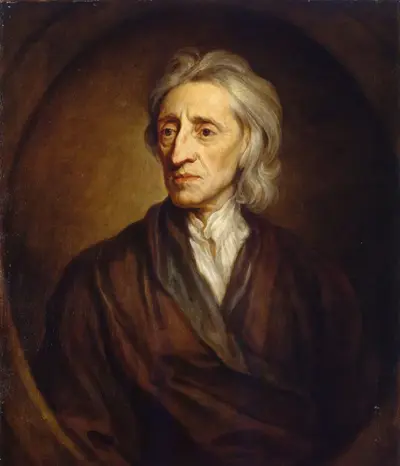
John Locke FRS was an English philosopher and physician, widely regarded as one of the most influential of Enlightenment thinkers and commonly known as the "Father of Liberalism". Considered one of the first of the British empiricists, following the tradition of Sir Francis Bacon, Locke is equally important to social contract theory. His work greatly affected the development of epistemology and political philosophy. His writings influenced Voltaire and Jean-Jacques Rousseau, and many Scottish Enlightenment thinkers, as well as the American Revolutionaries. His contributions to classical republicanism and liberal theory are reflected in the United States Declaration of Independence.
