William Blackstone Quotes
THIS law of nature, being co-eval with mankind and dictated by God himself, is of course superior in obligation to any other. It is binding over all the globe, in all countries, and at all times: no human laws are of any validity, if contrary to this; and such of them as are valid derive all their force, and all their authority, mediately or immediately, from this original.
Blackstone, William. Commentaries on the Laws of England. Vol. 1, Clarendon Press, 1765, p. 41.


Watchtower Bible and Tract Society of New York

The President did not apparently think that this would be a religious test of office which would be prohibited by the Constitution.

The Judge, a fundamentalist Christian, unilaterally had a large granite monument of the Ten Commandments installed in the Rotunda of the Supreme Court Building. A Federal Judge in deciding a lawsuit ordered him to remove the monument which was held to have been placed there to symbolically uphold the supremacy of the Judeo-Christian tradition in our legal system. Judge Moore appealed to the U. S. Supreme Court which let the removal decision stand. However, the judge still resisted. The other 8 Alabama Supreme Court justices then removed the Chief Justice and ordered the monument removed. Moore who had been selected to office in a “Bible-Belt State,” still blocked the removal forcing a showdown with the Federal Courts and his colleagues in Alabama. Shortly thereafter, both the monument and Judge Moore were removed.


Congress had passed the Edmunds Act prohibiting plural marriage. Taylor, who himself had 7 wives and 35 children, went “underground” and secretly operated the church from exile.


Niemoller, a World War I U-boat commander and clergyman, was jailed for rejecting the National Socialist ideology and for appealing to German Christians not to embrace the new paganism of Nazism and Fascism.

He had written this at the request of Joan van der Capellen, the Dutch revolutionist, to have a Christian theological justification for revolution against the then Dutch monarchy. See {639741} and {639742}.

Huckabee, a fundamentalist Christian Minister in addition to being a politician, had been very tolerant of other religions and their rights. However, on the abortion question he seemed to be calling for a Constitutional amendment to make abortion illegal. The likelihood of passing such a Constitutional Amendment given the supermajority requirement was very low given the national division on this polarizing issue. A very careful reading of the candidate’s statement shows that he never literally advocated an amendment. He just stated that is would be easier to change the Constitution than to change the world of God which to believers was immutable. Thus his statement was true, yet some interpreted it as a very clever way of making a moral statement without committing to a course of action that would deny women the right to make decisions over the use and risks to their own bodies, souls, and lives.


On the Fugitive Slave Act: As one of the leading American Catholic intellectuals during the 19th Century, Brownson’s opinions went far in keeping Catholics from joining the side of the abolitionists. However, just a few years later his tone would change and he would become one of the few Catholic writers to refuse to defend slavery, see {610710}. While the majority of Catholics refused to join the abolition movement, they often did so because abolitionism was closely tied to anti-Catholicism, see Gordon {611392} or Shaftesbury {611106}. Other reasons included Irish immigrants fearful of competition from Black labor and the fear of liberal individualism and social disorder, which was prevalent in 19th century Catholic thought. For a further explanation on the relationship between American Catholics and slavery, see McGreevy {612036}.


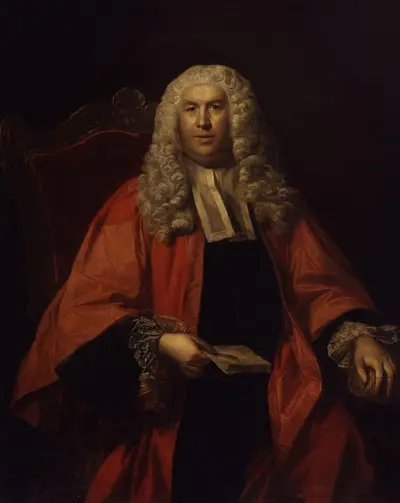
Sir William Blackstone SL KC was an English jurist, judge and Tory politician of the eighteenth century. He is most noted for writing the Commentaries on the Laws of England. Born into a middle-class family in London, Blackstone was educated at Charterhouse School before matriculating at Pembroke College, Oxford, in 1738. After switching to and completing a Bachelor of Civil Law degree, he was made a fellow of All Souls, Oxford, on 2 November 1743, admitted to Middle Temple, and called to the Bar there in 1746. Following a slow start to his career as a barrister, Blackstone became heavily involved in university administration, becoming accountant, treasurer and bursar on 28 November 1746 and Senior Bursar in 1750. Blackstone is considered responsible for completing the Codrington Library and Warton Building, and simplifying the complex accounting system used by the college. On 3 July 1753 he formally gave up his practice as a barrister and instead embarked on a series of lectures on English law, the first of their kind. These were massively successful, earning him a total of £453 (£71,000 in 2021 terms), and led to the publication of An Analysis of the Laws of England in 1756, which repeatedly sold out and was used to preface his later works.
