Mahatma Gandhi Quotes
Through the deliverance of India, I seek to deliver the so-called weaker races of the earth from the crushing heels of Western exploitation in which England is the greatest partner.
Gandhi, Mahatma. The Collected Works of Mahatma Gandhi. Vol. 35, Publications Division, Ministry of Information and Broadcasting, Government of India, 1969, p. 450.


The Negro World, Garvey’s Newspaper, was the country’s largest Black newspaper. The statement brought great distress to white Europe whose colonial interests were threatened.


British colonial economics imported raw materials to England which then exported them back to the colonies as manufactured goods. Gandhi correctly calculated that by minimizing purchase of English cloth, colonial control of India would not be as profitable. Gandhi not only called for the boycott, but called on Indians to spin their own cloth, set an example be spinning himself, and his Congress party adopted the spinning wheel as its logo and symbol which continues today. Narcotics, was at the time not only legal, but British economic interests controlled much of the world narcotics trade. Gandhi’s call for a boycott of narcotics was as much an economic tactic as it was a health measure.


That is exactly what happened. However it would not happen until after the Second World War.


The chance was the fact that war—the War of 1812—had been declared between Britain and America. Tecumseh allied himself with General Isaac Brock, the British Commander of the Western Forces. Tecumseh himself was put in charge of all Indian forces and given the rank of a British Brigadier General. However, Brock was killed shortly thereafter, and his replacement, General Procter, was not as skilled at working with Indian Allies and the British-Indian alliance was defeated bringing to an end the notion of “one great Indian nation.”

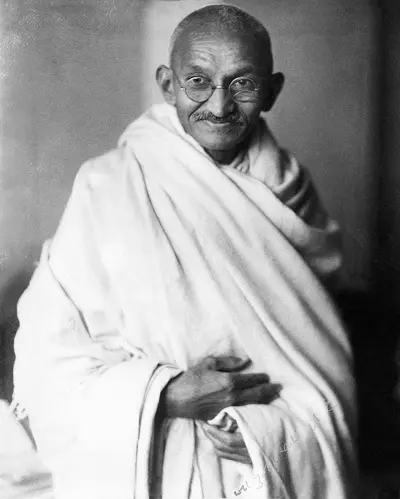
Mohandas Karamchand Gandhi was an Indian lawyer, anti-colonial nationalist, and political ethicist, who employed nonviolent resistance to lead the successful campaign for India's independence from British rule, and in turn inspired movements for civil rights and freedom across the world. The honorific Mahātmā (Sanskrit: "great-souled", "venerable"), first applied to him in 1914 in South Africa, is now used throughout the world.
