Omar Al-Bashir Quotes
Mahatma Gandhi went from Africa to India, and once India won its freedom, it helped African countries to get their independence.
Haidar, Suhasini. "We Are Victims of U.S. Double Standards: Omar Al-Bashir." The Hindu, 30 Oct. 2015.


In 1937 the U. S. Treasury Department commissioned a pair of large murals to decorate the lobby or the Ariel Rios Federal Building in Washington DC. On the mural was depicted a U. S. Mail Service from Alaska to Puerto Rico. It showed four Puerto Rican women reading a letter in the Inuit dialect presumably delivered from Alaska. The authorities loved the mural until they discovered the translation of the Inuit letter. This was a direct reference to the Puerto Rican Nationalist Independence Movement. That year 18 Puerto Rican Nationalists were killed and over 100 wounded when police fired into a crowd of demonstrators on March 21. Kent, a famous artist, planted a newspaper story with the translation and soon media all over the company were drawing attention to the Puerto Rican movement, just as Kent had intended.


In the negotiations the Indian nationalists of the Congress Party did not get everything that they wanted. Rarely does anyone in legitimate negotiations. This was a masterful example of oratory where Nehru wanted to produce the euphoria and historical gravitas that was appropriate when the largest group of people in world history gained self-government and independence. Yet the Congress Party had made promises in the platforms over the years that had not been kept. The partition of the one nation into a Muslim state as well as India denied the Indians of some of their historically and economically most important territories and he had to acknowledge that failure without dampening the public enthusiasm for the great achievement. This was a masterpiece.


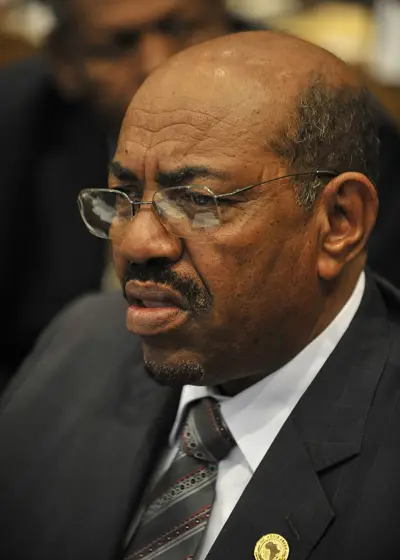
Omar Hassan Ahmad al-Bashir is a Sudanese former military officer and politician who served as the seventh president of Sudan under various titles from 1989 to 2019, when he was deposed in a coup d'état. He was subsequently incarcerated, tried and convicted on multiple corruption charges. He came to power in 1989 when, as a brigadier general in the Sudanese Army, he led a group of officers in a military coup that ousted the democratically elected government of prime minister Sadiq al-Mahdi after it began negotiations with rebels in the south. He was elected three times as President in elections that have been under scrutiny for electoral fraud. In 1992, al-Bashir founded the National Congress Party, which remained the dominant political party in the country until 2019. In March 2009, al-Bashir became the first sitting head of state to be indicted by the International Criminal Court (ICC), for allegedly directing a campaign of mass killing, rape, and pillage against civilians in Darfur. On 11 February 2020, the Sudanese government announced that it had agreed to hand over al-Bashir to the ICC for trial.
