Dinesh D'Souza Quotes
The Indian independence leaders, Nehru, Gandhi and others, were products of the West.
Dinesh D'Souza, Writer and Philosopher, White House Domestic Policy Analyst (Republican), C-SPAN, “In Depth”, Interview “In Depth” February 4, 2007
Sourced by: Eigen's Political and Historical Quotations


Even into the 21st century, the problem was not solved and Muslims from Pakistan continue their futile but tragic terrorist tactics to try and acquire more territory from India." 1st Earl Mountbatten of Burma

He attempted to broker an agreement between India’s Muslims and Hindus as to the form of the successor government.


This is another example of how President Roosevelt conducted his own international diplomacy independent of his own State Department. At the time, the U. S. State Department would not have any contact with Nehru who was in and out of British Indian jails for his anti-Colonial agitating. Roosevelt, however was a great admirer of Nehru and the Congress party and the commitment to democracy, freedom of religion, speech and the press and civil rights. Roosevelt and the American military strategic leaders were beginning to worry that China, even with help, would not be able to hold off the Japanese aggression, and India would become a frontier for the Allied war effort. The President realized that Nehru and his Congress Party were pressuring England for independence and extreme Indian nationalists were advocating non-support of the British military effort and strikes and protests to bog down the British army dealing with them instead of fighting the Japanese in Burma and elsewhere. There were a large number of Indian Brigades fighting for the British and if the Indian military volunteers were to be discouraged or boycotted, the allied war effort would suffer. So the President's style was to personally see what he could contribute over and above (and often to the distress of) his agencies established to do the job.

Churchill, out of power at that time, was outraged that the Labour government was about to grant India self-government and independence removing half of the British Empire which he revered. His passion for maintaining the empire was so extreme that it affected his usual great powers of political analysis and prediction. The Congress Party Leaders led India to become the largest democracy the world had ever known, and leaders like Nehru and Gandhi became almost as famous and remembered as was Churchill himself.

He persuaded many other rulers to join the Indian Union when India became Independent.

This speech to over 100,000 people galvanized the Indian nationalists They had been asking the British to change the constitution to give India more independence. Churchill was opposed to any policy that would diminish the British Empire, but needed the Indians as men of India served in the British Army in every major theater of WWII. So instead of saying "No" Churchill held out the possibility but at a later time. He argued that it was inopportune to alter the Constitution in the midst of a world war.

He later settled for Home Rule in the Irish Treaty of 1922

The document was signed in his name by his ministers.

He was an Army Major at the time he wrote this article. In 1966 his positive view of Britain was overwhelmed by the anti-colonial fervor that existed in much of Africa.


Nostradamus made thousands of prophecies most of which seem not to have occurred as he predicted. However there were a few that some people believe predicted later events. In this case some think that he predicted the colonization and independence of America.
As early as 1933, 14 years before Indian independence, there was a movement for a separate Muslim nation within India. Ironically, Hindu India was never a nation in any sense of the word, but was a series of independent principalities much like Italy before its unification. However, with the Muslim conquest of the various Indian states, there was a central authority, ruler, and nation for the first time. Later the Muslims had to argue that India was not a country when it was they who had made it such. When the Muslim Emperors were in power, they argued that India was one country under their authority. But when they lost power, the Muslims argued the other side of the issue.

Some in the military and state department were distressed by this writing. England was our major WWII ally. We were fighting, side by side with soldiers of many of the colonies of the British Empire. Some nationalists in India were urging non-cooperation in the Allied war effort. Most American leaders adopted the policy of holding our differences with our allies (England, China & Russia) until after the war was won. However, Mrs. Roosevelt, was more outspoken than most other public officials.
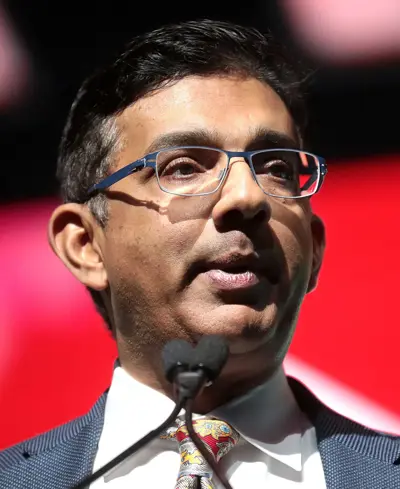
Dinesh Joseph D'Souza is an Indian-American right-wing political commentator, provocateur, author, filmmaker, and conspiracy theorist. D'Souza has written over a dozen books, several of them New York Times best-sellers.
