John Jay Quotes
This war does not strike me as a great evil. The more we are ill-treated abroad the more we shall unite and consolidate at home.
declared against the United States by Barbary Algeria
John Jay, 1745-1829, President of the Continental Congress, Governor of New York (Federalist), U. S. Foreign Secretary, First Chief Justice of the U. S. Supreme Court, Quoted in Thomas A. Bailey, A Diplomatic History of the American People, 1968
Sourced by: Eigen's Political and Historical Quotations

War had broken out in Europe and Jefferson enumerated a series of actions so that the United States would remain neutral. He was concerned that individual Americans would partake in foreign wars and then be captures of have to be ransomed or would give offence to some other nation who would assume that the American was acting with government approval and was allied with an enemy. The issue of American mercenaries fighting in foreign conflicts has been controversial ever since.


He was referring to President Jefferson’s inclination to send the military against the Barbary Pirates. They had an incredible extortion racket going in the Mediterranean. If nations would pay them an annual sum each year, they would not attack and seize merchant ships of that country and sell the ships and goods while holding the sailors for ransom. Note that Congress was not very well respected at that time which Jay and most leaders did not think was a good thing, much like in the 21st century.


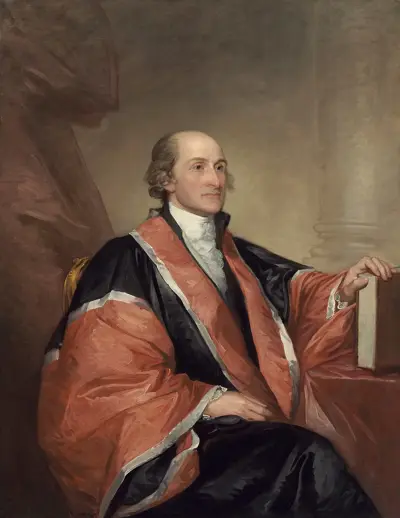
John Jay was an American statesman, patriot, diplomat, Founding Father, abolitionist, negotiator, and signatory of the Treaty of Paris of 1783. He served as the second Governor of New York and the first Chief Justice of the United States (1789–1795). He directed U.S. foreign policy for much of the 1780s and was an important leader of the Federalist Party after the ratification of the United States Constitution in 1788.
