Homer Lea Quotes
This Republic and Japan are approaching that point of contact which is war.
In the earliest prediction of the World War II conflict between America and Japan:
Homer Lea, 1876-1912, American Political & Military Mercenary & Philosopher, General of Chinese Revolutionary Army, The Valor of Ignorance, 1908
Sourced by: Eigen's Political and Historical Quotations


At the time the President denied that he had decided to invade Iraq. Skelton saw the “handwriting on the world.”

1st Earl Lloyd-George of Dwyfor

In this case, he was referring to the situation with the Barbary Pirates who had an incredible extortion racket going in the Mediterranean. If nations would pay them an annual sum each year, they would not attack and seize merchant ships of that country and sell the ships and goods while holding the sailors for ransom. Jefferson favored and authorized war—a naval attack which for many reasons the European nations had not done (they just paid the tribute). Then a peace treaty was finally signed—the first American Treaty.


Although Great Britain had abolished slavery, British economic interests during the Civil War suffered because of the northern blockade of the South. Much political opinion in England was hostile to the blockade policies of the Union. Bright, a great admirer and supporter of the United Sates and the Union cause was concerned that the United States might drift into War with Great Britain. His letter to Senator Sumner was written with the understanding that it would be in shared with President Lincoln, and it was actually read at a cabinet meeting.


With a professionalized all volunteer military, most of whom came from just a few socio-economic strata of our society, wars at the time were fought and the risks and burdens borne by a small part of American society. The rest of society, unlike the Second World War did not experience any change in their style or standard of living.


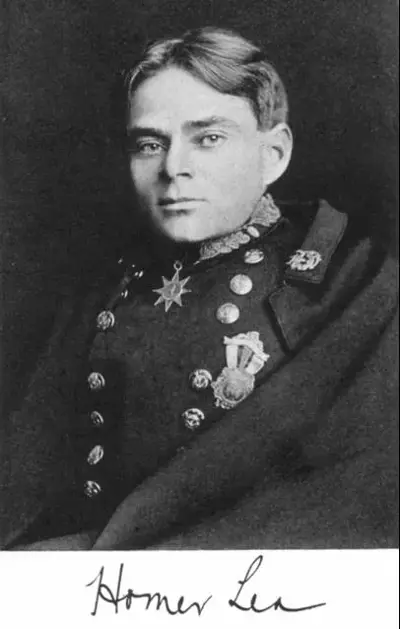
Homer Lea was an American adventurer, author and geopolitical strategist. He is today best known for his involvement with Chinese reform and revolutionary movements in the early twentieth century and as a close advisor to Dr. Sun Yat-sen during the 1911 Chinese Republican revolution that overthrew the Qing Dynasty, and for his writings about China and geopolitics.
