Juvenal Quotes
This is my wish, this is my command, my pleasure is my reason
Juvenal. Juvenal and Persius. Translated by G. G. Ramsay, Harvard University Press, 1918, p. 105.


Abu Nuas was not only gay but wrote much poetry about the beauty and love of homosexuality. He was a tutor to Caliph Muhammad al-Amin when the Caliph was a boy. The Caliph also had affairs with boys one of which was openly public. This Caliphate was a period of great scientific and cultural development in the Islamic world and at that time the Islamic world was the scientific and cultural leader of the world—far in advance of Christian Europe—still in the Dark Ages. Today, in most Islamic countries, and particularly Iran, homosexuals or those who write about it, if they get caught, are usually jailed or even executed—for the very activity that Abu Nuwas, a great Persian Poet and Abu Nuwas, the highest religious and civil authority in Islam openly engaged in. After about 1100. Islamic fundamentalists got control of the religion, closed the society to open inquiry and tolerance of ideas, and Islam has gone from the most advanced cultural and scientific culture in the world to one of the worst cultures in terms of modernism. Those Islamic fundamentalists who yearn for a return to the Caliphate know little about the history of that period or they would condemn it heartily. The situation is not dissimilar as for devout Roman Catholics who discovered that some Popes who were Saints were also libertines, married, had mistresses and children. In one case the son of the Pope himself became Pope. At first the reaction is to deny the happenings and ascribe to them falsehoods spread by enemies of the faith.


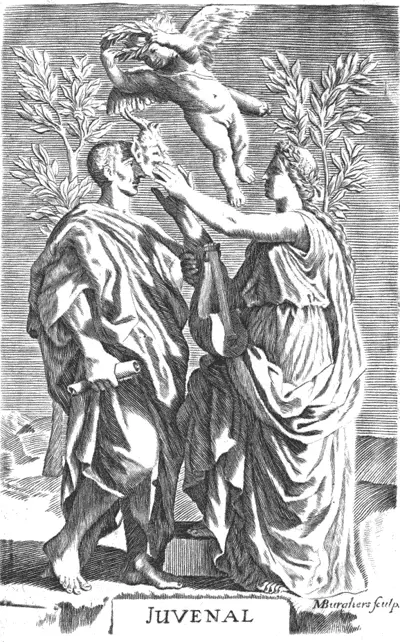
Decimus Junius Juvenalis (Latin: [ˈdɛkɪmʊs ˈjuːniʊs jʊwɛˈnaːlɪs]), known in English as Juvenal (/ˈdʒuːvənəl/ JOO-vən-əl), was a Roman poet active in the late first and early second century AD. He is the author of the collection of satirical poems known as the Satires. The details of the author's life are unclear, although references within his text to known persons of the late first and early second centuries AD fix his earliest date of composition. One recent scholar argues that his first book was published in 100 or 101. Because of a reference to a recent political figure, his fifth and final surviving book must date from after 127.
