John Locke Quotes
Thirdly, the supreme power cannot take from any man any part of his property without his own consent: for the preservation of property being the end of government, and that for which men enter into society, it necessarily supposes and requires, that the people should have property, without which they must be supposed to lose that, by entering into society, which was the end for which they entered into it; too gross an absurdity for any man to own.
Locke, John. Two Treatises of Government. Awnsham Churchill, 1690, p. 356.


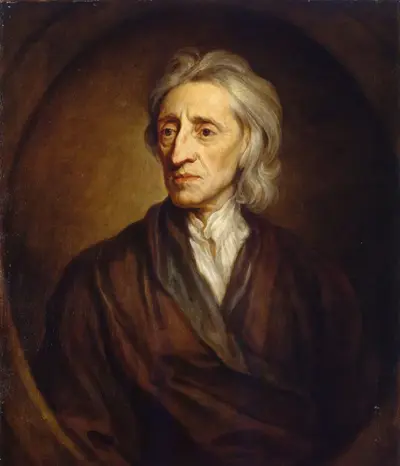
John Locke FRS was an English philosopher and physician, widely regarded as one of the most influential of Enlightenment thinkers and commonly known as the "Father of Liberalism". Considered one of the first of the British empiricists, following the tradition of Sir Francis Bacon, Locke is equally important to social contract theory. His work greatly affected the development of epistemology and political philosophy. His writings influenced Voltaire and Jean-Jacques Rousseau, and many Scottish Enlightenment thinkers, as well as the American Revolutionaries. His contributions to classical republicanism and liberal theory are reflected in the United States Declaration of Independence.
