Henry David Thoreau Quotes
The authority of government . . . can have no pure right over my person and property but what I concede to it.
Thoreau, Henry David. "Resistance to Civil Government." Æsthetic Papers, edited by Elizabeth P. Peabody, The Editor, 1849, p. 213.

See also Gerald R. Ford for a later similar expression.


While this was a strong central political principle for Reagan, a substantial part of his political party strongly advocated the against the government interjecting itself into people’s lives.

To the pro-slavery politician, abolition was an abdication of government to fulfill it’s 3 major responsibilities. Slaves were private property and government had to safeguard the owner’s right to own that property. Slave owners had always been free in America to hold slaves, and abolition impinged on that freedom. And the slavery advocates knew better than the abolitionists how cruelly the slaves had been treated. They reasoned—that if anyone had treated them that way, they would if they could take revenge and kill the slave owners. Therefore, abolition threatened the lives of Southern citizens. Of course, Brown and his fellow slave-owners did not consider the fact that they had interfered with the right of the slave to own property, they denied him freedom, and in many cases killed slaves as examples or out of neglect. Their “logic” was that slaves were not citizens and therefor were not entitled to these protection.


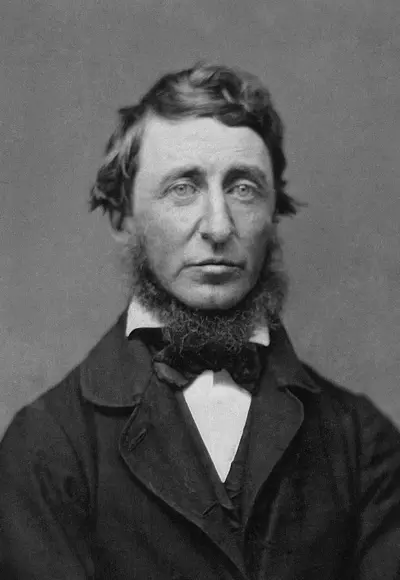
Henry David Thoreau was an American naturalist, essayist, poet, and philosopher. A leading transcendentalist, he is best known for his book Walden, a reflection upon simple living in natural surroundings, and his essay "Civil Disobedience" (originally published as "Resistance to Civil Government"), an argument for disobedience to an unjust state.
