John Locke Quotes
Freedom of men under government is to have a standing rule to live by, common to every one of that society, and made by the legislative power vested in it; a liberty to follow my own will in all things, when the rule prescribes not, and not to be subject to the inconstant, unknown, arbitrary will of another man.
John Locke, 1632-1704, English Political Philosopher, Second Treatise on Civil Government, 1681
Sourced by: Eigen's Political and Historical Quotations


Catherine II—the Great—appointed a commission to suggest model laws for Russia based on some of the principles of the European Enlightenment. The laws were never officially adopted but they are interesting in that they were the product of “liberal” thinking at the time. This particular definition of “liberty” is similar to that ruse in many country’s modern constitutions which will “guarantee” a right like freedom of speech so long as it does not violate any laws.


This was one of the first scholarly analysis of the history, psychology, and culture of the American Western Frontiersman. It is still considered one of the best.


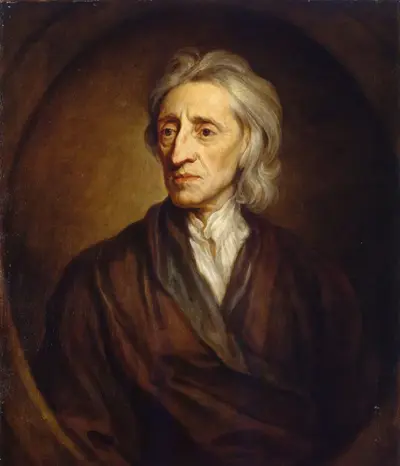
John Locke FRS was an English philosopher and physician, widely regarded as one of the most influential of Enlightenment thinkers and commonly known as the "Father of Liberalism". Considered one of the first of the British empiricists, following the tradition of Sir Francis Bacon, Locke is equally important to social contract theory. His work greatly affected the development of epistemology and political philosophy. His writings influenced Voltaire and Jean-Jacques Rousseau, and many Scottish Enlightenment thinkers, as well as the American Revolutionaries. His contributions to classical republicanism and liberal theory are reflected in the United States Declaration of Independence.
