James P. Cannon Quotes
They killed Trotsky not by one blow; not when this murderer, the agent of Stalin, drove the pickax through the back of his skull. That was only the final blow. They killed him by inches. They killed him many times. They killed him seven times when they killed his seven secretaries. They killed him four times when they killed his four children. They killed him when his old coworkers of the Russian Revolution were killed …. Stalin and his traitor gang were consumed by a mad hatred of the man who reminded them of their yesterday. Trotsky, the symbol of the great revolution, reminded them constantly of the cause they had deserted and betrayed, and they hated him for that. They hated him for all the great and good human qualities which he personified and to which they were completely alien. They were determined, at all cost, to do away with him.
James P. Cannon, 1890-1974, National Chairman, Workers Party of America, Obituary, Leon Trotsky Memorial Meeting, Diplomat Hotel, New York City. August 28, 1940
Sourced by: Eigen's Political and Historical Quotations


Iturbide, known also as Agustin I, was the first Emperor of Mexico who was executed by a firing squad.

The Lockout was a major industrial dispute between approximately 20,000 workers and 300 employers which took place in Ireland's capital city of Dublin. The dispute lasted from August 1913 to January 1914, and is often viewed as the most severe and significant industrial dispute in Irish history. The Employers Association, intent on breaking the Unions, told workers that if they did not resign from the Union, they would be fired. With the exception of the Guinness company, all the major employers fired most of their employees and brought in scab labor from England. The Union workers and their families were starving and only food from English labor unions kept them alive. The workers finally had to give in and for signing pledges to refrain from joining unions, they were allowed to have their jobs back. Although it seemed a victory for the employers, as this letter explained, the price was paid for years thereafter and soured Irish labor relations for most of the 20th century. While the locked out workers were both Protestants and Catholics, the Irish Catholic Church sided with the employers and even opposed a plan whereby children of Irish strikers would be temporarily looked after by British trade unionists in England, Scotland & Wales. The church protested that Catholic children would be subject to Protestant or atheist influences when in Britain.

At the time very few national leaders and still fewer politicians were willing to even criticize McCarthy or his methods. Flanders, in a great example of political courage, did so.

Goldman and other American radicals who had been born in Russia were deported to America after the Palmer Raids. When she arrived, she was shocked that the Russian Revolution had betrayed all the principles of freedom that had been advocated by most of the communist leaders. She left Russia and for the rest of her life condemned the Russian Bolsheviks and the result of the Revolution. She was one of the first radicals who realized that Russia itself had betrayed the principles of the revolution.
Yuliy Osipovich Martov


The same article denies the fact that the Holocaust ever existed. Al-Akhbar was not just an ordinary newspaper. It is the Egyptian Government’s Official Daily Newspaper—the same Government that was the recipient of the second largest amount of United States foreign aid.


Germany had been a world intellectual center of science, arts and letters. After the Nazi’s came to power most of the great German Intellectual leaders like Albert Einstein—both Jews and non-Jews—left Germany. A few like Roth remained, but those espoused by the Nazis were second rate and the “feebelists of dilettantes.”

The Russian domination of Communist parties throughout the world, was opposed very early. In many countries there were major struggles between the pro-Russian communists and the independent communists.


Nathaniel Bacon had led a rebellion in Virginia and had routed the Governor’s troops and caused him to flee leaving control of Virginia to Bacon and his followers who were far more democratic and advanced. However Bacon succumbed to swamp fever, and his followers could not hold the colony together giving the Governor a chance to establish his authority. He then went on a vengeful reign of terror, executing all of Bacon’s followers he could get his hands on. With no danger to the authority of the Crown, King Charles felt that Berkeley had gone too far. The King’s father Charles I had been executed in the aftermath of the English Civil War, but he had executed far fewer than Berkely had done in Virginia.


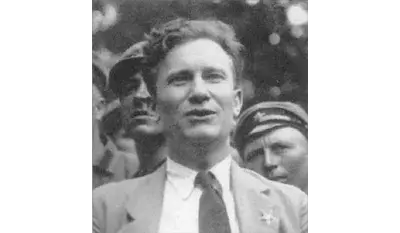
James Patrick Cannon was an American Trotskyist and a leader of the Socialist Workers Party.
