Tom Allen Quotes
They don't have special rights because we have civil rights laws that protect them. The laws work both ways.
Allen, Thomas H. Congressional Record, 109th Congress. U.S. Government Printing Office, 2005.


This quotation was a slight paraphrase from Article 14 of the Republican Party Platform which had been adopted unanimously at the Chicago Party Convention on May 17, 1860. This was the convention where Lincoln was nominated. It is not known who originally drafted Article 14, although Lincoln's agents were very active in the platform drafting process. In his later campaign speech, Lincoln ran on the Party Platform.


He was trying to calm many Americans who were upset that a young Black man who was accused of a minor misdemeanor of selling loose cigarettes (not whole packs) was being arrested by 5 white New York City police officers who thought that he was not cooperating forced him to the ground with one using a “choke hold” that was against Police Department regulations. The video, taken by a citizen, showed the arrested man crying to the police several times that he could not breathe when the pressure was placed by the officer with the choke hold. He man was choked to death. The coroner declared the death a homicide. However, the Staten Island district attorney presented the case to the Grand Jury in such a way that the jury found no reason to indict any of the police officers for any crime. Staten Island is a borough of New York far smaller and more suburban than the rest of New York System and more than half of all the white New York City police officers lived in the only conservative borough of New York where they were a major political force in the election of the borough district attorney. The President told the public that the Justice Department would investigate the case to determine if the victim’s civil rights had been violated.


For a similar application of the law to all see the Massachusetts Body of Liberties over a century earlier.


This ruling upheld a military draft for males only. The logic was that men and women were dissimilar persons.

What was to become the 14th Amendment was being discussed. Several of the most radical Republicans drafted language that would allow Congress to make any law regarding life, liberty or property, so that they could be sure that the States would not make their laws in a discriminatory manner. However, Hotchkiss and the majority wanted to be sure the laws were not discriminatory but they didn’t want Congress to have the power to make any law regarding life, liberty and property for every state. The current version of the 14th Amendment just prohibited discrimination in laws, not empowering the Federal Government to override the state governments in most important areas.

This statement in the President’s Second Inaugural. Infuriated the politicians of the Southern States. Remember, at the time there was brutal discrimination throughout most of the South, and more important to the South than the fact if the discrimination was their perverse view that this was a right, proper and necessary state of affairs for the welfare of the people and was required by Christianity’s mandates as they read the Scripture. For the President to state so publicly that discrimination was contrary to the law, justice, good faith, citizenship and fairness was a major shock. Since the early days of reconstruction after the Civil war in the Grant Administration, no president had spoken so publicly and openly against the Southern status quo.

“Familia” in Latin meant in this context, the community or the citizens as opposed to the officials, The Bishop determined the former was under attack by the officials who in the probating of wills and estates would take bribes or levy taxes under “laws” that they would make up on the spot bilking the rightful inheritors of the property and wealth of the deceased. The principle that laws and regulations must be written down in advance and not otherwise, is a fundamental part of Western law today, But as this quotation shows, it was not always such.


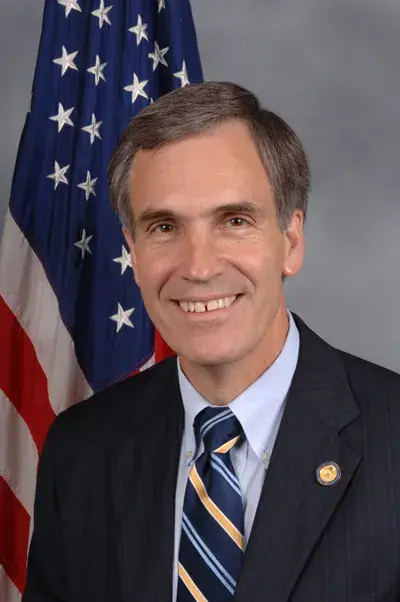
Thomas Hodge Allen is a former member of the United States House of Representatives representing Maine's 1st congressional district, and the Democratic nominee for the U.S. Senate in 2008 against Republican incumbent Senator Susan Collins. Allen lost to Collins (61.5% to 38.5%).
