Samuel Hopkins Quotes
These Scriptures, therefore, are infinitely far from justifying the slavery under consideration; for it cannot be made to appear that one in a thousand of these slaves has done any thing to forfeit his own liberty.
Hopkins, Samuel. The Works of Samuel Hopkins, D.D. Vol. 2, Doctrinal Tract and Book Society, 1854, p. 568.

Elected at 24 as the youngest British Prime Minister. This is perhaps the most elegant statement on the problem in English history, but it was not the first. Oliver Cromwell had preceded him. See Oliver Cromwell’s succinct version earlier: {585597}.


As a key member of Lincoln’s cabinet, William H. Seward was most concerned with preserving The Union. However, since the Constitution was written in 1787, there had been compromises made with the pro slavery forces of the South to give them proportionally more political power and to avoid interfering with the institution of slavery. The Dred Scott Supreme Court decision forced the Northern States to actively cooperate in enforcing and maintaining slavery. Large numbers of abolitionists had reached their limit and wanted no more compromises regarding slavery. Mrs. Seward was one of those. This quotation also illustrates the influence that some women had in politics even though women could not vote. Frances Seward was very much a political partner with her husband who was favored to beat Lincoln for the Republican Presidential nomination.


Although English, Cobett spent time in America and published a newspaper, The Porcupine Gazette, in Philadelphia. We was very conservative but on the issue of slavery his resembled a liberal point of view. He never used sugar, coffee, or rum because slave labor produced them. However, he advocated legally enslaving lazy people, blacks and whites, who would not work.

Duchess of Bedford. In 1853, during a visit to England, Harriet Beecher Stowe was presented with a petition containing the signatures of over a half million British women asking for an end to American Slavery. It was in 26 bound volumes. The backing of the prestigious Duchess and so many other English women had a profound effect on American Women and the growing strength of the Abolition movement.


This moral statement from a New jersey Quaker abolitionist is not particularly noteworthy, However what makes this quote important is that Woolman traveled throughout the South preaching this as his main theme. At that time — before the American Revolution — he did so and was not attacked or intimidated; he was mostly ignored by the Southern authorities. At the time, the South was very confident of its ability to continue slavery. Years later, when the abolition movement grew larger and stronger, a Northern Quaker Preacher doing this not not escape with his life.


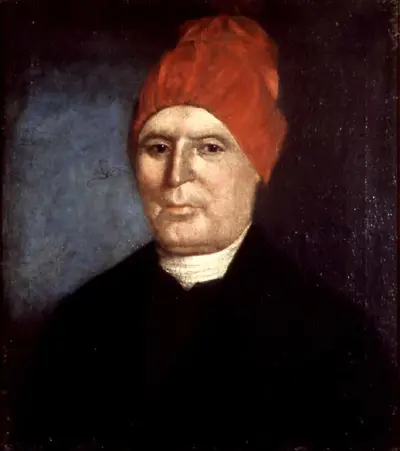
Samuel Hopkins was an American Congregationalist theologian of the late colonial era of the United States. Hopkinsian theology was named for him. Hopkins was an early abolitionist, saying that it was in the interest and duty of the U.S. to set free all of their slaves.
